Mango sago pudding recipe is a beloved Filipino-inspired dessert that combines two incredible elements into one spoonful of paradise. This pudding features tender sago pearls suspended in rich, creamy coconut milk, topped with vibrant fresh mango chunks. The mango sago pudding recipe has become a favorite for home cooks seeking refreshing, elegant desserts that feel both simple and luxurious. The combination of tropical flavors, silky texture, and stunning presentation makes this pudding perfect for family gatherings, warm weather meals, or whenever you want something special. This mango sago pudding recipe delivers authentic tropical taste with minimal effort and affordable ingredients you likely already have at home.
| Prep Time | Cook Time | Total Time | Servings | Difficulty | Cuisine |
|---|---|---|---|---|---|
| 15 minutes | 20 minutes | 2 hours (plus chilling) | 6 servings | Easy | Filipino |
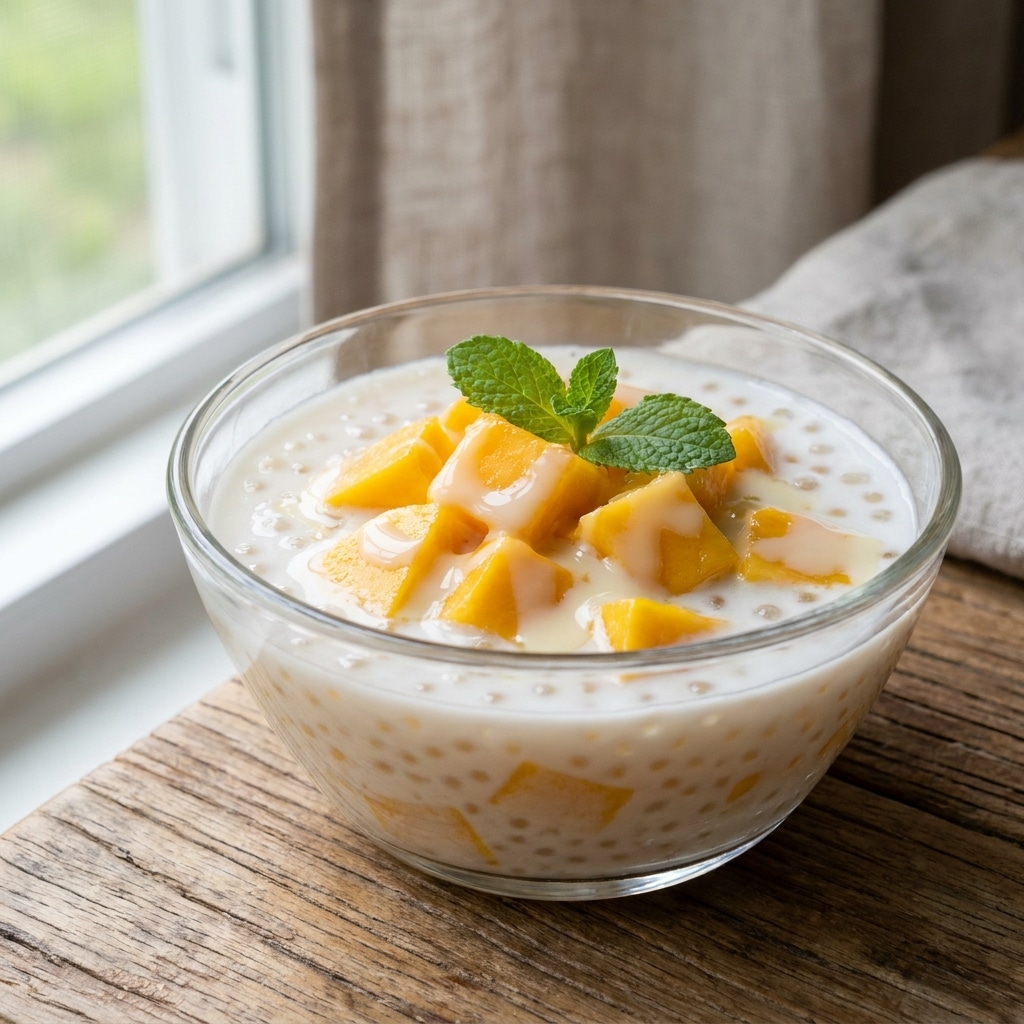
Table of Contents
Table of Contents
Why This Mango Sago Pudding Recipe Works
The mango sago pudding recipe succeeds because it balances simplicity with spectacular results. From my experience preparing this dessert countless times, I can confirm that the combination of tender sago pearls with smooth coconut custard creates an irresistible texture contrast. The mango sago pudding recipe requires only basic cooking skills and no specialized equipment beyond a pot and mixing bowls. This recipe has earned its reputation as one of the most reliable tropical desserts because each component plays a crucial role in the final product.
The beauty of mango sago pudding recipe lies in how the flavors develop during chilling. As the pudding sits in your refrigerator, the sago pearls absorb the creamy coconut mixture, becoming perfectly tender while remaining distinct. Fresh mango adds natural sweetness and tropical brightness that complements the rich, velvety coconut custard base. The mango sago pudding recipe delivers impressive results whether you’re cooking for experienced food lovers or introducing someone to Filipino desserts for the first time.
This pudding represents comfort food elevated to special-occasion status. The mango sago pudding recipe takes approximately two hours from start to finish, including chilling time, making it perfect for meal planning. The texture combination keeps people returning for more bites, and the visual presentation with bright mango pieces against white pudding impresses every guest. Whether served at casual family dinners or formal gatherings, mango sago pudding recipe always receives praise for its elegant simplicity and authentic tropical flavor profile.
Home cooks appreciate this recipe because nothing can go seriously wrong during preparation. The mango sago pudding recipe teaches fundamental cooking techniques while delivering restaurant-quality results. The individual components can be prepared separately and combined moments before serving, or assembled ahead for convenient entertaining. This flexibility makes mango sago pudding recipe ideal for busy cooks who want impressive desserts without complicated procedures or tight timing requirements.
Mango Sago Pudding Recipe Ingredients
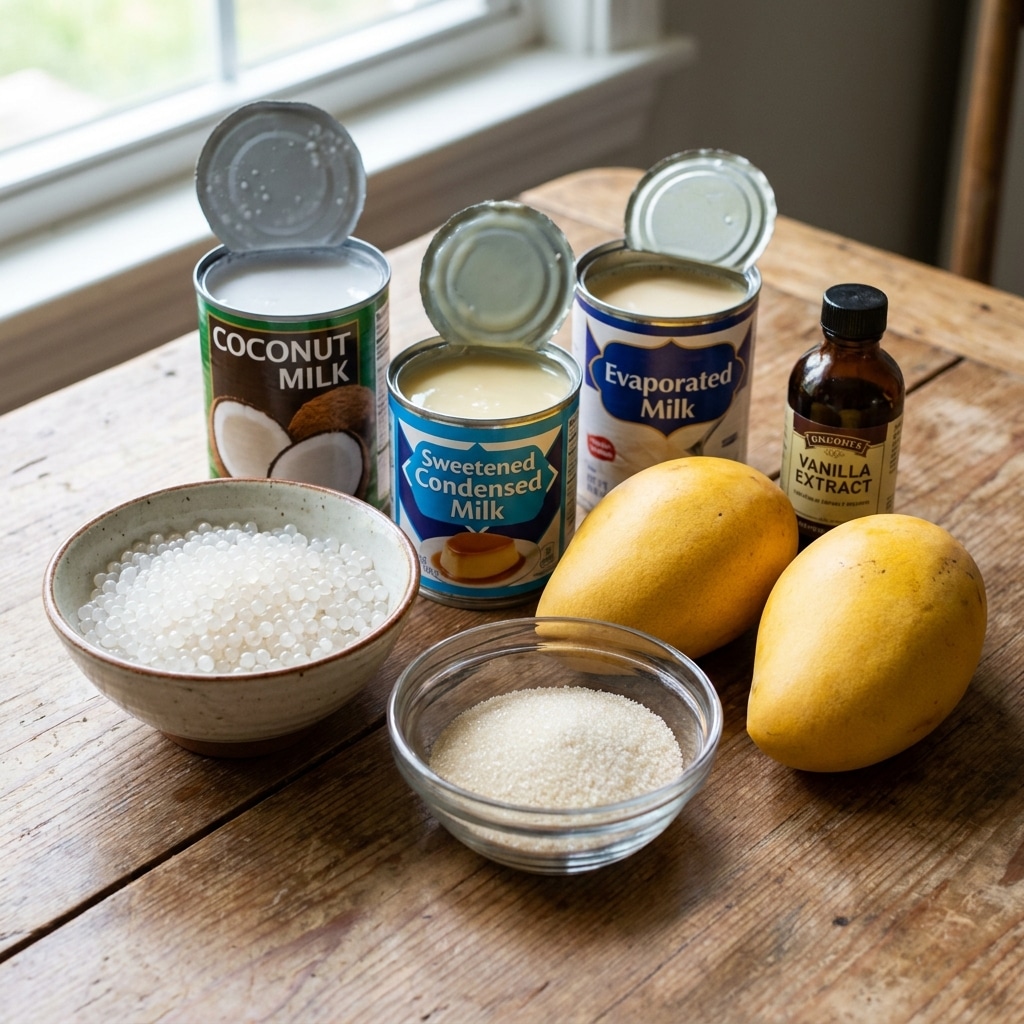
Gathering quality ingredients ensures your mango sago pudding recipe achieves the perfect balance of creamy, sweet, and tropical flavors. Each component contributes specific textural and flavor elements that define this classic dessert. The mango sago pudding recipe relies on a surprisingly short ingredient list, yet delivers complex, satisfying results.
| Ingredient | Quantity | Notes with Alternatives |
|---|---|---|
| Sago pearls | 1 cup | Also called tapioca pearls. Small pearl variety works best. Ensure purchased from reputable stores for quality assurance. |
| Coconut milk (full-fat) | 2 cans (13.5 oz each) | Use canned full-fat coconut milk for richness. Light coconut milk reduces creaminess but works if preferred. Shake well before opening. |
| Condensed milk | 1 can (14 oz) | Sweetened condensed milk is essential for pudding consistency and sweetness. No substitute recommended for best texture. |
| Evaporated milk | 1 can (12 oz) | Provides additional creaminess and richness. All-purpose option without specialty substitutes needed. |
| Fresh mango (ripe) | 2 large mangoes | Choose sweet, fragrant mango varieties like Ataulfo or Alphonso. Firm flesh prevents mushiness. Peel and cube just before serving. |
| Water (for cooking sago) | 6 cups | Use filtered water if desired. Bring to rolling boil before adding sago pearls. |
| Sugar (optional) | 2-3 tablespoons | Add if mango variety is less sweet than expected. Taste pudding before adding. |
| Vanilla extract (optional) | 1 teaspoon | Enhances tropical flavor profile. Use pure vanilla extract for best results. |
When preparing your mango sago pudding recipe, prioritize fresh, ripe mangoes for optimal sweetness and aroma. The quality of coconut milk significantly impacts the final pudding texture and taste, making it worth purchasing premium brands. Your mango sago pudding recipe benefits from using all ingredients at room temperature before cooking, which ensures smooth mixing and consistent results.
How to Make Mango Sago Pudding Recipe
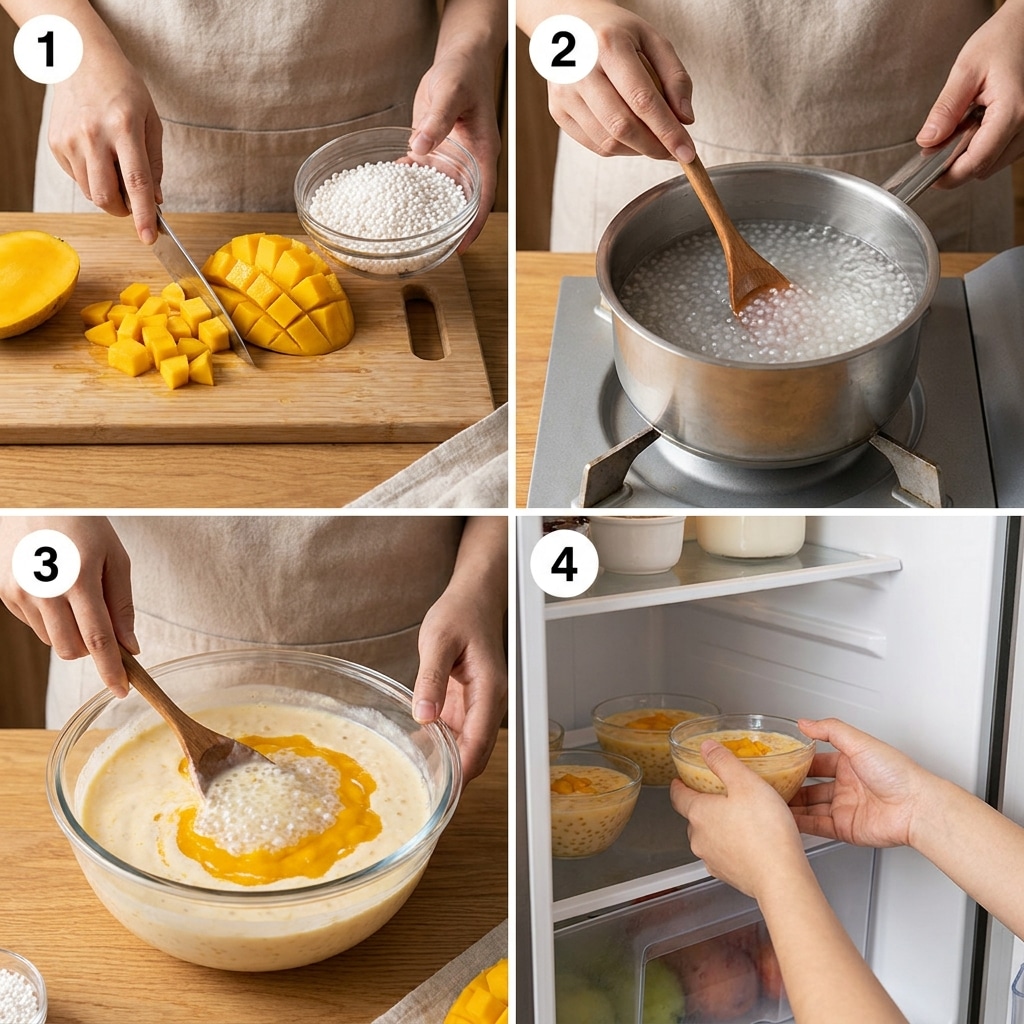
Follow these straightforward steps to create restaurant-quality mango sago pudding recipe at home. Each stage builds on the previous one, creating layers of flavor and texture that define this tropical dessert. The mango sago pudding recipe cooking process divides into three main phases: cooking the sago, preparing the pudding base, and assembling with fresh mango.
Phase 1: Cook the Sago Pearls
- Bring six cups of water to a rolling boil in a large pot over high heat.
- Carefully pour one cup of sago pearls into the boiling water while stirring constantly to prevent clumping.
- Reduce heat to medium and stir frequently for eight to ten minutes as sago pearls cook and become translucent.
- Continue cooking until sago pearls appear mostly clear with only small white centers remaining in the middle of each pearl.
- Drain the cooked sago through a fine-mesh strainer, reserving the sago but discarding the cooking water.
- Rinse the drained sago under cold running water for two minutes, stirring gently to separate pearls and remove excess starch.
- Transfer the cooled sago to a clean bowl and set aside while preparing the pudding mixture for your mango sago pudding recipe.
Phase 2: Prepare the Pudding Base
- Pour both cans of full-fat coconut milk into a large mixing bowl and whisk together until smooth and well combined.
- Add the condensed milk to the coconut milk, stirring continuously until completely blended without lumps remaining.
- Pour the evaporated milk into the mixture while whisking gently to incorporate all ingredients evenly throughout.
- Add vanilla extract if desired and stir the entire mixture for one minute to ensure thorough distribution.
- Taste the pudding mixture and add two to three tablespoons of sugar if mango selection appears less sweet than preferred.
- Gently fold the cooled sago pearls into the pudding mixture using a spatula, ensuring even distribution without crushing any pearls.
- Pour the combined mango sago pudding recipe mixture into serving bowls or one large serving dish for your preference.
Phase 3: Chill and Serve
- Cover the pudding bowls or dish with plastic wrap or aluminum foil to prevent absorption of refrigerator odors.
- Refrigerate the mango sago pudding recipe for at least two hours, though overnight chilling improves flavor development significantly.
- While pudding chills, peel ripe mangoes and cut flesh into small, even cubes just one hour before serving.
- Divide the chilled pudding into serving bowls just before presenting, ensuring equal distribution of sago pearls in each portion.
- Top each mango sago pudding recipe serving with fresh mango cubes arranged attractively on the surface.
- Serve immediately and enjoy the contrast between chilled pudding and fresh, sweet mango pieces.
Chef Tips for Perfect Mango Sago Pudding Recipe
These professional techniques ensure your mango sago pudding recipe achieves ideal texture and flavor every single time. Drawing from years of preparing this dessert, I’ve identified specific methods that consistently deliver exceptional results. Apply these tips to elevate your mango sago pudding recipe from good to absolutely outstanding.
- Stir the sago continuously during the first three minutes of cooking to prevent clusters from forming at the pot bottom, ensuring evenly cooked pearls throughout your mango sago pudding recipe.
- Cool sago pearls completely before folding into the pudding mixture, as hot pearls can partially melt and stick together rather than remaining as distinct, tender pieces in your mango sago pudding recipe.
- Whisk the pudding base vigorously for two full minutes after adding all dairy components to incorporate air, creating a lighter, airier texture than passive stirring achieves in your mango sago pudding recipe.
- Refrigerate the pudding for minimum two hours but preferably overnight, allowing flavors to meld and the pudding to reach ideal thickness for serving your mango sago pudding recipe.
- Cut mango pieces no larger than three-quarters of an inch to ensure comfortable spoonfuls and elegant presentation when topping your mango sago pudding recipe servings.
- Add mango pieces just before serving rather than hours in advance, preventing the fruit from breaking down or releasing excess moisture into your mango sago pudding recipe.
Common Mango Sago Pudding Recipe Mistakes to Avoid
Understanding common pitfalls helps you sidestep problems and achieve perfect mango sago pudding recipe results consistently. Most mistakes stem from rushing the process or misunderstanding how ingredients interact during preparation. Learning these lessons prevents frustration and ensures your mango sago pudding recipe impresses everyone who tastes it.
Overcooking the sago: Sago pearls become mushy and lose their distinctive texture when cooked longer than ten minutes. This happens because home cooks misjudge doneness by expecting completely clear pearls instead of the correct translucent appearance with tiny white centers. Fix this by removing sago from heat when pearls still show small white dots in their centers, as residual heat continues cooking them during cooling. Your mango sago pudding recipe depends on properly cooked sago for the signature texture that makes this dessert special.
Folding sago into warm pudding: Hot or warm sago pearls stick together into clumps rather than remaining as individual pieces suspended throughout the pudding. This occurs because warmth causes the starch exterior to soften prematurely. Always cool cooked sago completely under running water before combining with pudding mixture in your mango sago pudding recipe.
Using light coconut milk: Light coconut milk produces a thinner, less creamy pudding that lacks the luxurious texture characteristic of authentic mango sago pudding recipe. The reduced fat content cannot provide the necessary richness, leaving the pudding watery despite using all other ingredients correctly. Always purchase full-fat coconut milk specifically labeled as such, shaking the can well before opening to ensure fat and liquid remain well combined throughout your mango sago pudding recipe.
Adding mango too far in advance: Fresh mango pieces release juice into the pudding over time, diluting the flavors and softening the fruit texture. The mango sago pudding recipe loses its visual appeal when mango pieces become mushy or fade in color. Add fresh mango topping no more than thirty minutes before serving for best results, or keep mango separate and add to individual bowls at service time in your mango sago pudding recipe.
Insufficient chilling time: Rushing the chilling process results in warm pudding that hasn’t set properly, delivering inconsistent texture. The mango sago pudding recipe requires minimum two hours for proper consistency development, though overnight produces noticeably better results. Plan ahead when making this pudding to allow adequate refrigeration in your mango sago pudding recipe.
Best Mango Sago Pudding Recipe Variations and Substitutions
Creative variations keep your mango sago pudding recipe exciting while maintaining the essential tropical character that defines this classic dessert. Each variation builds on the original mango sago pudding recipe foundation while introducing new flavors or accommodating dietary preferences. Experiment confidently knowing these adjustments honor the traditional spirit of this beloved pudding.
| Ingredient | Substitution | Impact on Flavor |
|---|---|---|
| Fresh mango topping | Fresh pineapple cubes or passion fruit pulp | Creates tangy tropical variation with different textural contrast against creamy pudding base |
| Sago pearls | Small tapioca pearls or chia seeds | Maintains similar texture with slightly different appearance; chia seeds add nutritional boost and distinctive visual appeal |
| Full-fat coconut milk | Half coconut milk plus half heavy cream | Intensifies creaminess and richness beyond traditional pudding while maintaining coconut character in mango sago pudding recipe |
| Condensed milk | Honey or maple syrup (¾ cup replacing full can) | Produces lighter sweetness with subtle floral notes; slightly less thick pudding consistency requires minimal adjustment |
| Vanilla extract | Cardamom, rose water, or almond extract | Introduces sophisticated spice or floral notes while maintaining the tropical foundation of mango sago pudding recipe |
| Evaporated milk | Whole milk or cashew cream | Reduces richness slightly while accommodating dairy-free preferences; cashew cream maintains luxurious texture in mango sago pudding recipe |
The mango sago pudding recipe welcomes creative interpretation while staying true to its tropical character. Consider layering the pudding with granola for texture contrast, or adding a small amount of pandan extract for distinctive Southeast Asian flavoring. Your mango sago pudding recipe becomes a canvas for personal preferences while maintaining recognition as this classic Filipino-inspired dessert.
Serving Suggestions for Mango Sago Pudding Recipe
The versatility of mango sago pudding recipe extends beyond simple bowl service, making it suitable for countless dining occasions and entertaining scenarios. Fresh mango pieces remain the traditional topping, but creative additions transform this pudding into memorable dishes for specific meals and celebrations. Your mango sago pudding recipe deserves thoughtful presentation that highlights its tropical elegance.
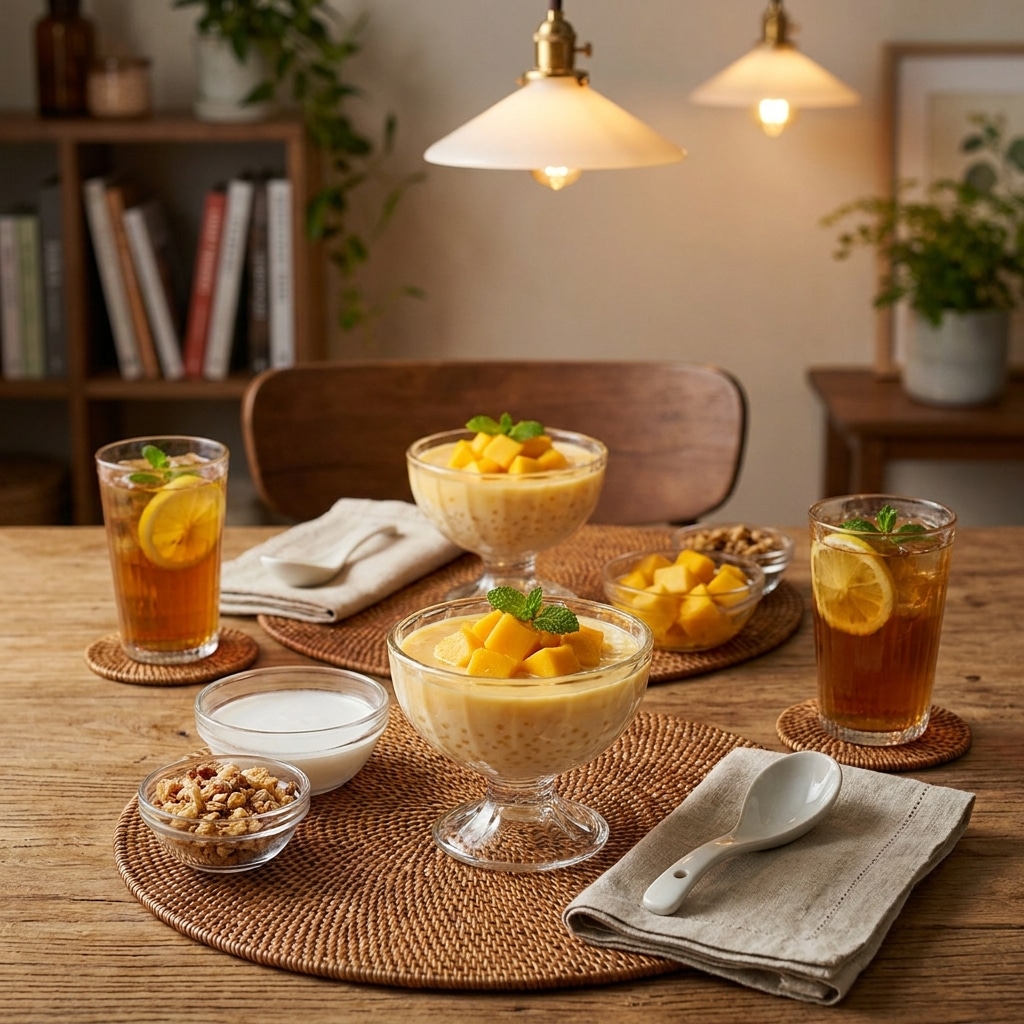
Serve your mango sago pudding recipe at family dinners by portioning into elegant glassware that showcases the beautiful white pudding and vibrant mango topping. The visual presentation alone impresses guests before they taste the creamy, tropical flavors. Add fresh mint leaves or toasted coconut flakes as garnish for added sophistication in your mango sago pudding recipe. Pair with strong brewed iced tea or iced coffee for refreshing beverage companionship that complements the rich, sweet pudding without overwhelming delicate flavors.
Transform your mango sago pudding recipe into a sophisticated dessert course at special gatherings by serving in small crystal glasses as part of a dessert sampler with other light treats. The chilled, creamy nature makes it perfect for warm-weather entertaining when traditional hot desserts feel inappropriate. Your mango sago pudding recipe becomes the centerpiece of summer gatherings when presented alongside fresh fruit and complementary treats.
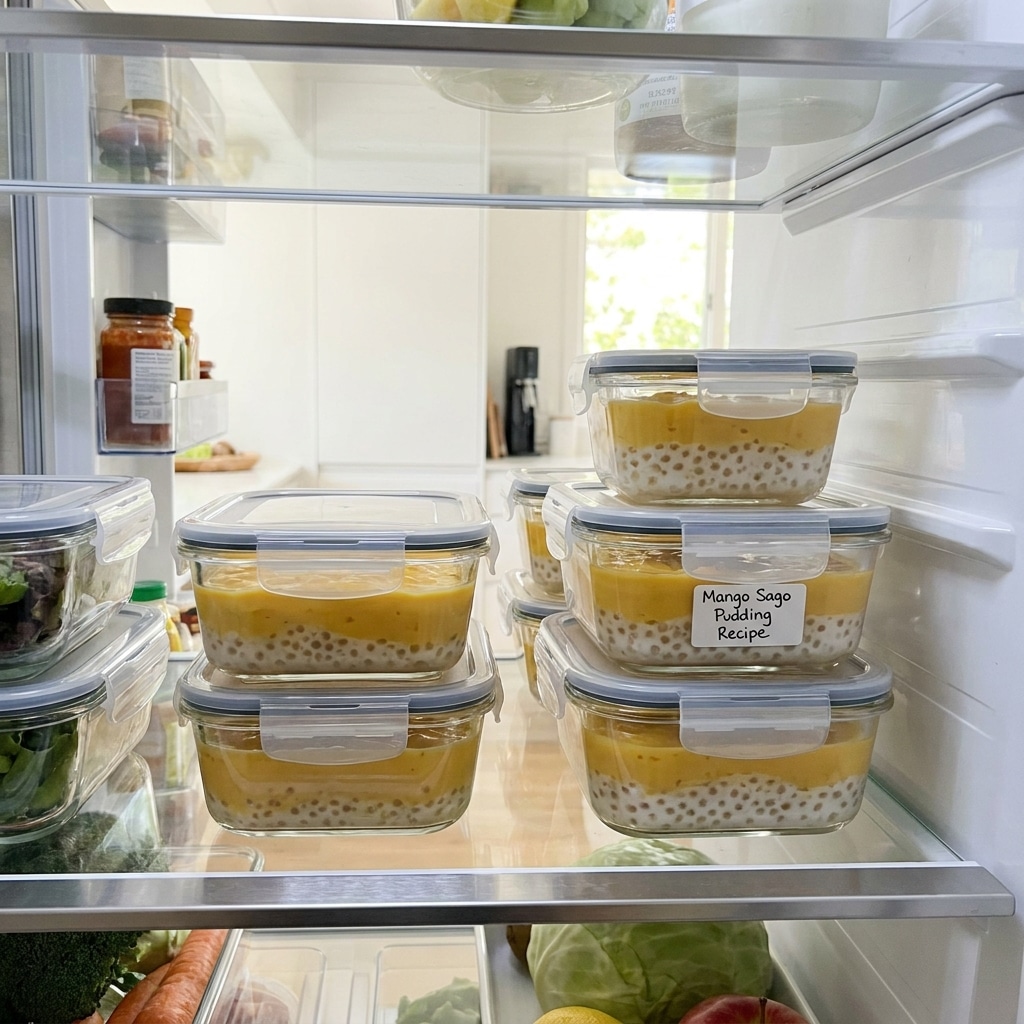
Create make-ahead meal prep advantage by preparing the pudding base days in advance, storing chilled pudding separately from fresh mango toppings. Individual portioned mango sago pudding recipe servings work beautifully as office desserts or school lunch treats for children who enjoy tropical flavors. Layer the pudding with granola in clear containers for textural contrast and visual appeal when packing your mango sago pudding recipe for transport.
Serve mango sago pudding recipe at Filipino celebrations, family reunions, and cultural festivals where this traditional dessert maintains special significance. The pudding represents comfort and connection to heritage while impressing non-Filipino guests unfamiliar with tropical cuisines. Your authentic mango sago pudding recipe becomes an educational culinary ambassador introducing people to genuine Filipino flavors and cooking traditions.
Storage and Reheating for Mango Sago Pudding Recipe
Proper storage extends the enjoyment of your mango sago pudding recipe while maintaining its signature texture and flavor integrity. Unlike many desserts, this pudding benefits from specific storage methods that account for its unique composition and optimal serving temperature. Your mango sago pudding recipe remains best when chilled but not frozen, preserving the tender sago and creamy pudding consistency that defines this dessert.
| Method | Duration | Instructions |
|---|---|---|
| Refrigerator storage | 3-4 days | Cover pudding bowl tightly with plastic wrap or transfer to airtight container to prevent absorption of odors. Keep mango topping separate until serving. Store pudding in coldest part of refrigerator away from foods with strong aromas. |
| Freezer storage (sago base only) | 1-2 months | Pour pudding into freezer-safe containers, leaving half-inch space at top for expansion. Pudding texture becomes slightly grainy after thawing; best used in blended applications rather than served as standalone pudding. |
| Freezer storage (mango only) | 2-3 months | Cube mango and freeze in single layer on baking sheet for two hours, then transfer to freezer bags. Frozen mango works best as cooking ingredient rather than fresh topping since texture softens upon thawing. |
| Sago base preparation | Make ahead 2 days before serving | Prepare pudding mixture without sago, cover and refrigerate. Cook sago separately on serving day, fold together just before chilling final pudding for best texture in mango sago pudding recipe. |
| Reheating (not recommended) | N/A | This pudding should not be reheated as it is served chilled. If pudding thaws beyond refrigerator temperature, mix gently before serving but do not heat or microwave. |
The mango sago pudding recipe remains food-safe when properly refrigerated and consumed within four days of preparation. Always use clean utensils when serving to prevent bacterial contamination, and remove any portion not consumed within two hours from serving for food safety. Your mango sago pudding recipe maintains ideal flavor and texture when stored as specified and served directly from refrigeration without additional preparation.
Nutritional Information for Mango Sago Pudding Recipe
Understanding the nutritional profile of your mango sago pudding recipe helps with dietary planning and portion control for health-conscious cooking. This dessert delivers not only tropical pleasure but also beneficial nutrients from natural ingredients including vitamins, minerals, and healthy fats. The mango sago pudding recipe provides satisfying sweetness without excessive added sugars beyond condensed milk used for traditional preparation.
| Nutrient | Amount per Serving |
|---|---|
| Calories | 285-310 |
| Total Fat | 12-14g |
| Saturated Fat | 10-11g |
| Carbohydrates | 38-42g |
| Dietary Fiber | 1-2g |
| Protein | 2-3g |
| Sugar | 28-32g |
| Sodium | 95-110mg |
| Vitamin C | 20-25% DV |
| Calcium | 15-18% DV |
Approximate values based on standard ingredient portions used in mango sago pudding recipe. Fresh mango contributes significant vitamin C content supporting immune function and skin health. The coconut milk provides medium-chain triglycerides supporting satiety and potential metabolic benefits. Your mango sago pudding recipe becomes a more nutritionally balanced treat when paired with fresh fruit or lighter meals during your eating day.
Frequently Asked Questions About Mango Sago Pudding Recipe
Can I substitute tapioca starch for sago pearls in mango sago pudding recipe?
Yes, small tapioca pearls work effectively as sago substitutes in mango sago pudding recipe, producing nearly identical texture and appearance. Use the same one-cup quantity and cooking time as specified for traditional sago. Chia seeds offer a modern alternative with added nutritional benefits, though they create slightly different visual and textural elements in your mango sago pudding recipe.
What’s the best way to tell when sago pearls are properly cooked for mango sago pudding recipe?
Properly cooked sago pearls should appear mostly transparent with only small white dots remaining in the very center of each pearl. The mango sago pudding recipe requires this specific doneness level to ensure tender but distinct pearls throughout the pudding. Completely clear sago indicates overcooking, which produces mushy pearls that break apart during mixing with your pudding base.
How can I fix lumpy mango sago pudding recipe pudding base?
Whisk the pudding mixture vigorously for two to three minutes to break apart any condensed milk clumps that failed to dissolve initially. If lumps persist, strain the mixture through a fine-mesh sieve before adding sago pearls to achieve smooth texture in your mango sago pudding recipe. Prevention through thorough whisking during preparation prevents this problem entirely.
Can I make mango sago pudding recipe without evaporated milk?
Yes, substitute evaporated milk with equal parts whole milk or cashew cream in your mango sago pudding recipe. The pudding becomes slightly less rich but maintains acceptable creaminess and structure. Avoid skim milk substitutes as they produce unacceptably thin pudding lacking the luxurious texture that defines quality mango sago pudding recipe.
How far in advance can I prepare mango sago pudding recipe for a dinner party?
Prepare the pudding base completely up to two days before serving, storing it covered in the coldest part of your refrigerator. Cook sago pearls and fold into pudding no more than one day ahead for best texture retention in your mango sago pudding recipe. Add fresh mango topping only thirty minutes before serving to prevent fruit from releasing juice into pudding.
What’s the ideal serving temperature for mango sago pudding recipe?
This pudding should be served directly from refrigeration at thirty-five to forty degrees Fahrenheit for optimal flavor and texture in your mango sago pudding recipe. The chilled temperature highlights the tropical freshness of mango while providing satisfying contrast to warm weather meals. Never serve at room temperature as the pudding becomes unappealingly soft and warm.
Can I use frozen mango for mango sago pudding recipe topping?
Frozen mango becomes too soft upon thawing for attractive pudding topping in your mango sago pudding recipe. Fresh mango maintains the textural contrast and visual appeal that makes this dessert special. Frozen mango works well blended into smoothies or cooked applications but should not replace fresh mango in traditional pudding preparation.
How do I store leftover mango sago pudding recipe?
Store pudding in a covered container on the coldest shelf of your refrigerator, away from aromatic foods that might taint flavors. Keep mango topping stored separately to prevent sogginess and maintain texture. Your mango sago pudding recipe remains safe and delicious for three to four days when properly stored, though flavor peaks within two days of preparation.
What type of mango variety works best for mango sago pudding recipe?
Ataulfo, Alphonso, or Honey mango varieties work beautifully in mango sago pudding recipe due to their sweet flavor, creamy texture, and minimal fiber content. These varieties provide superior taste compared to larger commercial mango types commonly available in supermarkets. Choose fragrant mangoes with slightly yielding flesh, avoiding overly firm or mushy options for best results in your pudding.
Is mango sago pudding recipe appropriate for dairy-free diets?
Yes, easily adapt mango sago pudding recipe for dairy-free preparation by substituting all dairy components with plant-based alternatives. Replace condensed milk with canned coconut cream, evaporated milk with unsweetened cashew cream or oat milk, and use full-fat coconut milk as specified. Your dairy-free mango sago pudding recipe maintains authentic tropical character while accommodating dietary restrictions.
Conclusion
The mango sago pudding recipe represents tropical dessert perfection achievable in any home kitchen with minimal ingredients and straightforward technique. This pudding combines silky coconut custard with tender sago pearls and vibrant fresh mango into a dish that feels elegant yet simple, special yet comforting. The mango sago pudding recipe succeeds because each element plays an essential role while remaining forgiving to home cooks of all experience levels. Whether you’re introducing your family to Filipino desserts or adding another repertoire recipe to your regular entertaining menu, this pudding delivers consistently impressive results every single time. Make your mango sago pudding recipe soon and discover why this tropical treasure has earned its beloved status in Filipino cuisine and hearts worldwide. The chilled, creamy pudding topped with sweet mango pieces creates an unforgettable dessert experience that tastes like a tropical vacation in a simple bowl.
Related Recipes You’ll Love
pink gelatin trick recipe for weight loss
no butter single serve chocolate chip recipe
instant mango ice cream with cool whip curry
chana masala instant pot zero oil
homemade mounds bars 3 ingredients
berry cottage cheese breakfast bowl
healthy chocolate coconut snack cake gluten free
chocolate chip cookie dough brownie bites
bariatric gelatin recipe for weight loss
silken tofu miso dressing recipe
caribbean curry bowl homemade recipe
tiktok ramen noodles recipe
tiktok tomato feta pasta recipe
Expert Resources and Food Safety
For additional information about food safety practices, consult official food safety guidelines from food safety authorities. Learn more about tropical fruit nutrition at comprehensive nutrition information resources to understand the health benefits of mango and coconut ingredients used in this recipe.
Print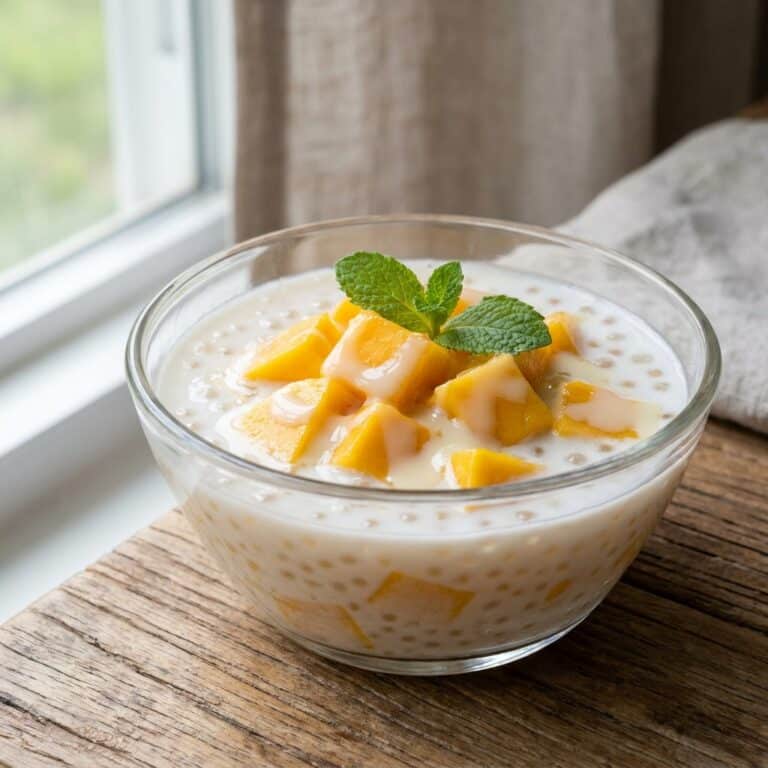
Mango Sago Pudding Recipe
Mango sago pudding recipe is a beloved Filipino-inspired dessert that combines tender sago pearls suspended in rich, creamy coconut milk, topped with vibrant fresh mango chunks. This tropical pudding is refreshing, elegant, and perfect for family gatherings, warm weather meals, or whenever you want something special.
- Total Time: 2 hours
- Yield: 6 servings 1x
Ingredients
- 1 cup sago pearls
- 2 cans full-fat coconut milk, 13.5 oz each
- 1 can sweetened condensed milk, 14 oz
- 1 can evaporated milk, 12 oz
- 2 large ripe mangoes, peeled and cubed
- 6 cups water, for cooking sago
- 2 to 3 tablespoons sugar, optional
- 1 teaspoon vanilla extract, optional
Instructions
- Bring 6 cups water to a rolling boil in a large pot over high heat.
- Carefully pour 1 cup sago pearls into the boiling water while stirring constantly to prevent clumping.
- Reduce heat to medium and stir frequently for 8 to 10 minutes.
- Cook until the sago pearls appear mostly clear with only small white centers remaining.
- Drain the cooked sago through a fine-mesh strainer and discard the cooking water.
- Rinse the drained sago under cold running water for 2 minutes, stirring gently to separate the pearls and remove excess starch.
- Transfer the cooled sago to a clean bowl and set aside.
- Pour both cans of full-fat coconut milk into a large mixing bowl and whisk until smooth.
- Add the sweetened condensed milk and stir continuously until completely blended with no lumps.
- Pour in the evaporated milk while whisking gently to incorporate evenly.
- Add vanilla extract if desired and stir for 1 minute.
- Taste the pudding mixture and add 2 to 3 tablespoons sugar if the mangoes are not very sweet.
- Gently fold the cooled sago pearls into the pudding mixture with a spatula.
- Pour the mixture into serving bowls or one large serving dish.
- Cover with plastic wrap or aluminum foil.
- Refrigerate for at least 2 hours, or overnight for deeper flavor.
- Peel the ripe mangoes and cut the flesh into small, even cubes before serving.
- Divide the chilled pudding into serving bowls if needed.
- Top each serving with fresh mango cubes arranged attractively on the surface.
- Serve immediately while chilled.
Notes
Cook the sago until mostly translucent with tiny white centers, then rinse well under cold water to prevent clumping. Use full-fat coconut milk for the creamiest texture and add fresh mango just before serving so it stays bright, sweet, and firm.
- Prep Time: 15 minutes
- Cook Time: 20 minutes
- Category: Dessert
- Method: Stovetop
- Cuisine: Filipino
- Diet: Vegetarian
Nutrition
- Serving Size: 1 serving
- Calories: 300
- Sugar: 30g
- Sodium: 105mg
- Fat: 13g
- Saturated Fat: 11g
- Unsaturated Fat: 2g
- Trans Fat: 0g
- Carbohydrates: 40g
- Fiber: 2g
- Protein: 3g
- Cholesterol: 20mg