Want to make something fun, safe, and endlessly entertaining for your kids? This 2025 DIY guide for colorful play dough is just what you need! With only three simple ingredients—yes, really!—you’ll whip up a batch of soft, vibrant dough perfect for sensory play. Whether it’s a rainy day activity or part of a creative homeschool plan, this play dough recipe is a hands-on hit. I still remember my niece’s eyes lighting up the first time we made it—pure joy!
What You Need to Make Colorful Play Dough
Okay, full disclosure: the first time I tried making DIY play dough, I completely winged it. Spoiler alert—it was a crumbly disaster that looked more like wet chalk than something my kids would want to touch. But after some trial, error, and a few epic messes, I finally nailed a foolproof recipe with just three ingredients. Yup—three.
The Core Trio: Just 3 Ingredients
Let’s break it down.
- 1/2 cup hair conditioner or hand lotion – I usually go for conditioner. It gives the dough that silky-smooth texture. Plus, it smells amazing.
- 1¼ cups corn starch – This is what gives the dough its squishiness. Start with 1 cup, then slowly add the rest to get the right feel.
- A few drops of food coloring – Here’s where the magic happens. Bold pink? Sky blue? Neon green? All fair game.
If you’re wondering, “Is this a safe kids craft?”—absolutely. These are non-toxic, pantry or bathroom-safe items. My daughter once tried to taste-test her dough (kids, right?), and thankfully, no drama ensued. Not edible, but not toxic either. Crisis averted.
Optional Tools (But Super Helpful)
- A medium mixing bowl
- A spoon or spatula
- Gloves if you don’t wanna stain your hands (learned this the hard way after going to the store with purple palms)
Now, if your kiddo has sensitive skin (my nephew breaks out from anything), opt for a hypoallergenic or fragrance-free conditioner. I found that the unscented Aveeno baby conditioner worked like a charm. No rashes, no fuss.
Oh, and here’s a tip that saved me: pre-mix the color with the conditioner before adding starch. You’ll get a more even tone without streaks. I tried adding color last once—bad move. It was like trying to mix dye into mashed potatoes.
Bottom line? This is one of the best easy play dough recipes out there for parents who don’t want to spend $10 on a store-bought tub. And let’s be honest—store dough dries out in like, a day.
Little Recap (because mom brain is real):
- Conditioner (or lotion) = Softness
- Corn starch = Structure
- Food coloring = Fun
Next up, I’ll show you how to mix it all like a pro. Trust me, if I can do it without making a giant mess (okay, a small mess), you definitely can too.
Step-by-Step Instructions for Making Play Dough
I swear, the first time I actually followed a legit easy play dough recipe, I felt like some kind of Pinterest wizard. No stove. No fancy tools. Just a bowl, a spoon, and some happy chaos. The key? Do not rush the process. The order you mix things really does matter. Ask me how I know (spoiler: one goopy mess later).
Step 1: Mix Your Base
Start with ½ cup of your hair conditioner or lotion. Scoop it into a medium bowl. This is your base, and it sets the stage for the whole batch. I usually use a silicone spatula—less mess, easier to scrape down the sides.
Pro Tip: If you’re making multiple colors, split the base into separate bowls right now. Trust me, it’s way easier than trying to separate sticky dough later.
Step 2: Add Color
Now’s the fun part! Drop in your food coloring—start with 2-3 drops. Stir until the conditioner turns into a rich, even color. Want pastel? Just a tiny dab. Going bold? Add more drops gradually.
Don’t make my rookie mistake: I once added green AND yellow thinking it’d be lemony. Nope. It turned swamp-mud brown. Less is more, folks.
Step 3: Add the Corn Starch
Dump in 1 cup of corn starch. Stir slowly at first; it’ll clump quick. As it thickens, switch from spoon to hands. It’ll feel weird at first—kind of like mixing powdered sugar into frosting. Keep going!
Then, gradually add that last ¼ cup of corn starch. The goal is a dough that’s soft but doesn’t stick to your hands. If it’s too sticky, sprinkle more starch. Too dry? Add a small dab of conditioner.
This step is the magic zone where a bowl of random stuff suddenly turns into smooth, squishy, non-toxic play dough.
Step 4: Knead Like a Boss
Once it starts holding together, dump it onto a clean surface and knead it for 1-2 minutes. At this point, it should be smooth, pliable, and super satisfying to squish. My daughter says it’s “like petting a cloud,” which honestly isn’t far off.
Step 5: Storage is Key
Store each color in a small plastic bag or an airtight container. I’ve had mine last over a week when sealed tight. If it starts drying out, a drop of conditioner kneaded in can revive it like magic.
One time I forgot and left it open overnight. The next morning? A rock. Lesson learned.
Tips for Customizing Your Dough
Okay, here’s where it gets really fun. Once you’ve nailed the base recipe, the sky’s the limit. I mean, why stop at one color or plain dough when you can make glitter play dough that smells like oranges or calming lavender? Kids go wild for it, and let’s be real—I do too.
Too Sticky? Too Dry? No Problem
Sometimes your dough might feel a little off. It happens.
- Too sticky? Sprinkle in a bit more corn starch, a teaspoon at a time.
- Too dry or crumbly? Add a small squirt of conditioner or lotion and knead it in.
There’s no shame in having to tweak the texture—I’ve had batches that started out like soup. Now, I just go slow and feel it out.
Add Some Scented Magic
I started experimenting with scented play dough after my sister-in-law made a batch that smelled like vanilla cupcakes. Game. Changer.
Here are some of my go-tos:
- Vanilla extract (smells like cookies—yes please)
- Lavender oil (calming for wild days)
- Citrus zest or oil (bright and refreshing)
Just a few drops go a long way. Mix it into the conditioner before adding starch so the scent blends evenly. And don’t go overboard—some oils are strong enough to knock you back.
Time to Shine: Add Glitter!
Glitter. Is. Everything.
For real, a little sparkle takes your custom play dough from fun to “OMG can we make this again?” I use fine craft glitter—nothing chunky that’ll fall out everywhere. Just mix it in during the kneading step, and voilà—instant magic.
Side note: If you’ve got toddlers, maybe skip this one or go with edible glitter. I learned the hard way that glitter diapers are a thing.
Mix Colors (Or Don’t)
Want a swirl effect? Don’t fully mix in the food coloring—just stir it lightly and knead gently. It gives a marbled, galaxy-vibe look that’s seriously cool. My kid called it “unicorn poop”—and suddenly that batch was everyone’s favorite.
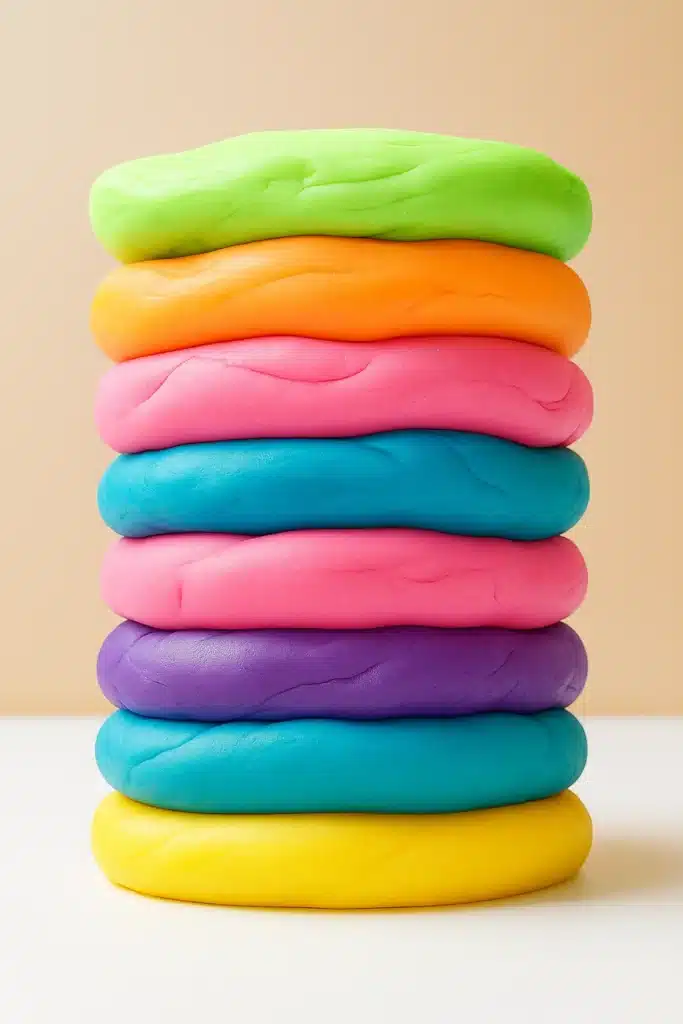
Wanna go full rainbow? Divide your base into bowls before coloring, make a few shades, and boom—you’ve got the full set. Makes a great DIY craft for kids’ parties, too.
Sensory and Educational Benefits of Play Dough
You ever hand your kid some play dough and suddenly they’re silent… for like 20 minutes? That’s not just a miracle—it’s sensory gold. I used to think play dough was just a mess waiting to happen. Turns out, it’s one of the best educational activities for preschoolers I’ve ever stumbled into.
Builds Fine Motor Skills (Sneaky Learning!)
When my son was 3, he had the grip strength of a spaghetti noodle. His preschool teacher suggested using play dough to help build up his hand muscles, and I kid you not—it worked.
- Rolling, squishing, poking, and shaping builds finger strength
- Pinching dough helps develop pincer grasp (big win for learning to hold a pencil)
- Using cookie cutters or kid-safe scissors takes it up a notch
This kind of hands-on work is gold for fine motor skills development, especially in younger kids.
Encourages Creativity & Imagination
Give a kid some dough, and suddenly it’s not just a blob—it’s a dinosaur cave, a pizza shop, or a magical forest. I’ve had full-on puppet shows acted out with tiny dough characters.
And when you let them mix colors or pick their own scents? Boom—you’re fostering decision-making and creative confidence. It’s like giving them an art set, but squishier.
Supports Sensory Needs
If you’ve got a kiddo with sensory issues, sensory play for toddlers is a lifesaver. My friend’s daughter has autism, and this dough is now a staple in her calm-down kit.
- It gives proprioceptive feedback (that deep muscle input some kids crave)
- You can add calming scents like lavender to help soothe anxious moments
- It’s non-threatening—there’s no right or wrong way to use it
And because it’s a DIY sensory tool, you can tweak it to fit your child’s needs. Softer, firmer, scented, unscented—whatever works.
Great for Learning Letters & Numbers
This one surprised me! We started using dough to roll out letters and numbers, and suddenly learning was… fun. Like, my daughter actually asked to “do school” so she could play with dough. Wild.
- Roll snakes into letter shapes
- Press number stamps into the dough
- Build sight words using letter cutters
If you’re doing homeschool preschool or just want an educational win on a rainy day, this trick’s a keeper.
So there you have it—a homemade play dough recipe so simple, so fun, and so kid-approved, you’ll wonder why you didn’t try it sooner. Just three ingredients, a bowl, and about ten minutes is all it takes to turn a dull afternoon into a full-blown sensory adventure. And the best part? It’s safe, soft, and fully customizable.
Whether you’re using it to help your toddler strengthen their little fingers, to soothe a sensory-sensitive kiddo, or just to spark some big, bold creativity on a rainy afternoon—this non-toxic play dough delivers.
Here’s a quick recap:
- It’s a DIY craft for kids that’s cheap, easy, and genuinely engaging
- You can scent it, sparkle it, swirl it—make it your own
- It doubles as a sensory play activity and sneaky learning tool
I’ve lost count of how many batches we’ve made, but each one brings new colors, new laughs, and usually, a little glitter on the floor. Worth it.
💡 If this colorful craft made your day easier (or just messier in a good way), pin it to your DIY board and share the squishy joy with other parents. Trust me—every mom friend who tries this will thank you later.