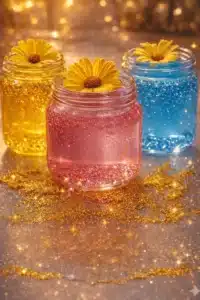
Did you know that honey is denser than water — and even oil? 🧐 With just a few ingredients from your kitchen, you can transform a plain jar into a stunning science project that kids will absolutely love. I still remember the first time I saw one — a rainbow in a jar! 🌈 In this guide, I’ll walk you through how to make your own colorful density jar at home using everyday materials. It’s not just pretty to look at — it’s a hands-on lesson in liquid density, buoyancy, and fun experimentation. Let’s dive in!
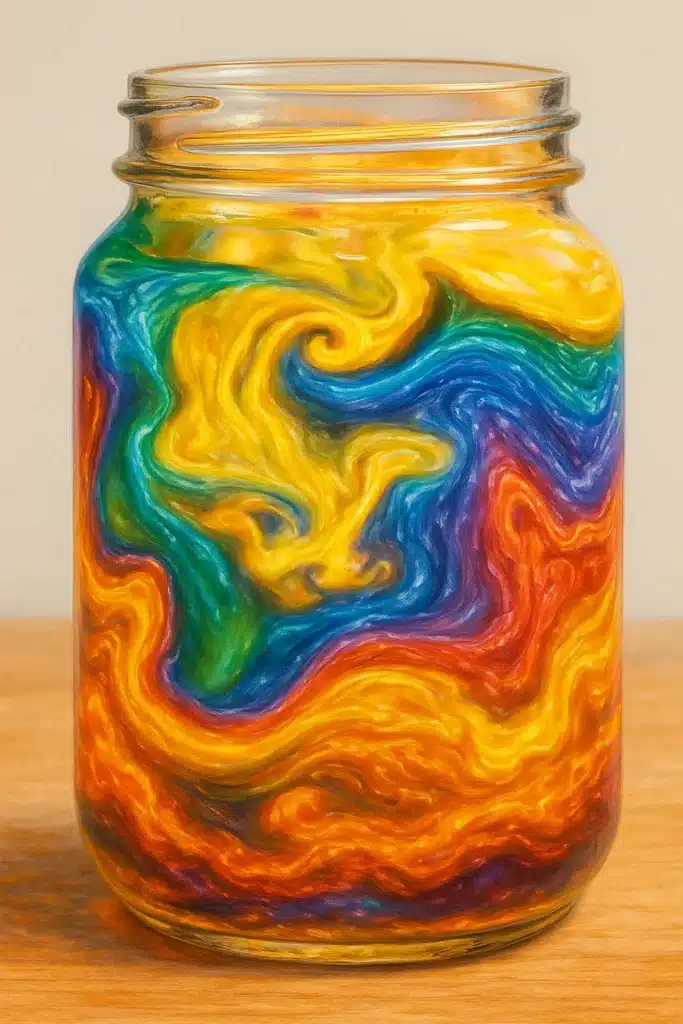
What Is a Density Jar? (Understanding Liquid Layers)
Alright, let me take you back to the day I accidentally created my first liquid density jar. It wasn’t planned. I was just trying to clean up the mess my toddler made with honey, soap, and oil. But when I saw those liquids sit in perfect, unmixed layers… something clicked.
That’s when I realized this wasn’t just a mess — it was an educational experiment waiting to happen.
Layers That Don’t Mix? Mind-Blown 🤯
If you’ve never tried a density jar science activity for kids, you’re missing out. It’s a simple idea — stack liquids with different densities and watch them sit in perfect, colorful harmony. The cool part? You don’t need fancy supplies. Just raid your kitchen: honey, dish soap, colored water, vegetable oil, even rubbing alcohol. Each liquid has a different weight (aka density), and when you layer them properly — boom! A visual masterpiece and a mini STEM project all in one.
I’ve had kids ask, “Why doesn’t the oil go down?” and it’s the best teaching moment ever. You get to explain how heavier liquids like syrup sink while lighter ones like alcohol float. And they totally get it — no boring textbook required.
Liquid Density: The Lazy Genius of Physics
Here’s what I love — liquid density doesn’t change just because it’s colorful. You’re actually seeing physics in real time. It’s hands-on science without the headache. We’re talking gravity, molecular structure, and immiscibility — all packed into a cute little mason jar.
Plus, this isn’t just eye candy. It helps teach kids observation, patience, and even hypothesis testing. “What happens if I shake it?” Spoiler: it turns into a cloudy mess… but then it separates again. Like magic. But it’s science.
A Few Lessons Learned
- Never rush the pour. The slower you go, the better the layers.
- Use the back of a spoon to soften the pour — it helps prevent splashes.
- Food coloring in the water makes the whole thing pop. Blue and green work best.
And don’t skip the rubbing alcohol layer on top. It’s optional, but dang does it look cool floating above the oil.
In short? A density jar isn’t just pretty — it’s a killer way to sneak science into playtime. One jar. Five liquids. A whole lotta learning.
Ingredients and Tools You’ll Need
You ever start a DIY science project thinking, “This’ll be easy,” only to realize you’re missing half the stuff? Yeah… been there. So let me help you out and give you the exact list of STEM supplies you’ll need to nail this science activity for kids without making three last-minute trips to the grocery store (yep, I’ve done that).
The Basic Stuff (That You Probably Already Have)
- 1 clear glass or jar – A tall, narrow one works best so the layers really show off.
- Honey or corn syrup – This is your base. It’s thick, heavy, and sinks to the bottom like a champ.
- Colored dish soap – Go with blue or green for the best contrast. I learned the hard way that yellow just blends in with the corn syrup.
- Water + food coloring – Mix a few drops of any bold color. Red, blue, purple — go wild.
- Vegetable oil – This one always surprises kids. It just floats like it’s defying gravity.
- Rubbing alcohol (optional) – If you want to be extra and add that slick top layer, this is your guy.
- Dropper or spoon – This is the trick for layering like a pro. Pour too fast and you’ll end up with a weird soup instead of pretty bands.
Pro Tip: Keep It Organized
I keep a little plastic bin labeled “educational experiment kit” in our pantry. Seriously, just dump the food coloring, spoons, and extra jars in there. That way, when the inspiration hits (or the rain comes), you’re ready to go.
I once used maple syrup instead of honey — big mistake. It worked, but everything smelled like pancakes for days. Oh, and don’t even think about using motor oil. That one’s a no-go. Stick to kid-friendly science materials and save yourself a chemical headache.
Dollar Store Hack
You don’t need fancy lab gear. Hit the dollar store for jars, measuring spoons, and even food coloring. I grabbed a whole “science activity kit” for under $10 just by thinking creatively. And bonus — the kids felt like real scientists with their own supplies.
This setup might seem simple, but trust me, it’s everything you need to make one of the coolest, most colorful educational experiments your kitchen’s ever seen.
Step-by-Step Instructions to Make Your Density Jar
Alright, now comes the fun (and slightly messy) part — building your very own rainbow in a jar. I’ve done this science experiment for kids more times than I can count, and every single time, it’s a showstopper. The kids go from “eh” to “WHOA!” in about five seconds flat. So, let’s break it down.
Step 1: Start with the Heaviest Liquid
Grab your jar and pour about an inch of honey or corn syrup into the bottom. This stuff is like liquid gold — it sinks straight to the bottom and doesn’t budge. It’s the foundation of your liquid density layers.
Tip: Try not to get it on the sides of the jar. It makes the whole thing look messy and sticky.
Step 2: Add Dish Soap
Next up — pour a layer of colored dish soap (I usually go with blue). Here’s the trick: tilt the jar and pour it slowly down the inside wall or use the back of a spoon. I learned this the hard way. First time I did it, I dumped it in like pancake syrup and everything just mixed. 🤦♀️
Dish soap is slightly less dense than honey, so it should sit right on top.
Step 3: Pour in the Colored Water
Mix a few drops of food coloring into a cup of water — I love using purple for contrast. Then, very gently pour it over the back of a spoon. This layer is super light compared to the dish soap, so it’ll float right above it — if you don’t rush it.
Trust me on this one: speed = disaster. Go slooooow.
Step 4: Add the Oil Layer
Time to break out the vegetable oil. This is the “magic moment” — it just floats over everything like it owns the place. You’ll start to really see the density layers forming, and it’s such a cool visual.
Use a clean spoon or pour gently along the side again. The clearer your pour, the better your jar looks in the end.
Step 5: Optional Top Layer — Rubbing Alcohol
If you’re feeling fancy (and your kids are old enough), add a fifth layer. Mix rubbing alcohol with a different color of food dye (I use green or pink) and pour it gently on top of the oil. It’s lighter than oil, so it’ll float perfectly if you layer it right.
One time, I tried using it without the dye — it just looked like water. No wow factor. Don’t skip the color!
Set the jar on the table and just… watch. No shaking, no poking. Just observe. You’ll see each liquid settle into its own space like it’s been choreographed. The kids usually lean in and whisper, “How does it DO that?”
And that’s the moment it all clicks. Hands-on learning at its best.
Bonus idea? Use a flashlight at night — it turns your jar into a glowing science lantern.
Science Behind the Magic: Why It Works
I’ll never forget the first time a kid asked me, “Why doesn’t the oil sink?” And I just stood there like… “uhhh.” 😅 It was a humbling moment. So I did what any halfway decent grown-up would do — I Googled it, then tried to explain it like a magician revealing a trick.
Turns out, there’s some solid science behind these liquid density layers, and once you get it, it’s kind of addicting.
What Is Density Anyway?
Alright, so liquid density science is basically all about how much “stuff” (mass) is packed into a certain amount of space (volume). Honey is super thick and heavy — it has a lot of mass in a small space. That’s why it sinks to the bottom like it owns the place.
Oil? Not so much. It’s light, spread-out, and full of air pockets. That’s why it floats over water like it’s on vacation.
It’s All About Weight and Float
Every liquid in your jar has a different density. Heavier ones go to the bottom, lighter ones float to the top. It’s like a silent battle happening in your glass — and everyone finds their place. This is what makes it such a powerful educational activity for visual learners.
I like to call it “gravity’s greatest hits.” The denser the liquid, the harder gravity pulls it down. No shaking needed — just let the liquids sort themselves out.
Why Don’t They Mix?
Okay, this one tripped me up too. Some of it comes down to polarity — which is just a fancy science word that means “do these liquids like to hang out together or not?” Oil and water? Not friends. They repel each other. That’s why you get those clean, crisp layers.
Add in the rubbing alcohol, and now you’re really showing off. It’s lighter than oil and barely mixes with anything, so it just floats right up there like a science ballerina.
Teaching Tip for Parents and Teachers
This is where the real magic happens — watching kids light up when you explain it. This isn’t just a hands-on science experiment; it’s a chance to talk about real physics, introduce new vocabulary, and even spark interest in STEM learning for kids. You’ll be surprised how many “whys” come out of one little jar.
One kid told me it was “like a rainbow made of science.” Honestly? Couldn’t have said it better myself.
Tips, Variations & Fun Additions
Now here’s where things get exciting. Once you’ve mastered the basic density jar, it’s like unlocking a whole new level of creative science experiments. I’ve played around with dozens of tweaks — some flopped (RIP to the chocolate syrup attempt), but others turned out way cooler than expected.
This is your chance to take your DIY educational project from “cool” to “OMG, that’s amazing!”
Glitter & Beads — A Sparkly Upgrade
First thing I tried adding? Glitter. And man, did it deliver. The glitter dances through the layers like confetti in a lava lamp. Bonus: tiny beads (think water beads or plastic pearls) float at different layers depending on their weight — instant visual science lesson.
Just don’t overdo it. Too much glitter and it becomes a murky mess. I’d say no more than a pinch.
Make It Glow
Want to blow your kid’s mind? Use glow-in-the-dark dye or fluorescent food coloring with a blacklight. We did a galaxy-themed version for Halloween and it looked like space trapped in a mason jar. Perfect for STEM crafts for kids that go beyond the usual coloring pages.
Go Full Theme Mode
Let your creativity go wild! I’ve done:
- Ocean jars with blue water and plastic fish
- Lava jars using orange and red tones
- Galaxy jars with dark purples, silver glitter, and glow accents
Each one turned into its own little science story. The kids even named them. “Oil-topia” was a fan favorite.
Swap Ingredients for Experiments
Switch it up to test what works best. Try maple syrup instead of honey. Use baby oil for a lighter top layer. Or mix water with sugar or salt to change its density. It’s a great intro to DIY science experiments with variables — the kind that makes kids feel like real scientists.
I once let my niece mix in chocolate syrup because she was adamant. It totally sank and smelled like a dessert gone wrong, but hey, she learned something.
Bonus Hack: Use Test Tubes or Vials
Mini jars or clear test tubes make adorable classroom-ready versions of this activity. Great for teachers doing science-themed activities or homeschoolers building a hands-on curriculum.
We made a set of tiny “science potions” and labeled each one with its liquid combo. The kids were obsessed. I even caught one trying to sell his for “five snacks or a Pokémon card.”
So, there you have it — your very own visual science experiment in a jar, right from the kitchen. What started with a bit of honey and a spoon turns into one of the coolest, most colorful STEM activities at home you can do with kids.
Every layer tells a story. From the syrupy weight of honey to the floating shimmer of oil, this jar packs more science into one glass than most kids get in a whole chapter of a textbook. And the best part? They’re having so much fun, they don’t even realize they’re learning.
These kinds of educational crafts for kids are what keep curiosity alive. They’re hands-on, they’re interactive, and let’s be real — they’re totally Instagram- and Pinterest-worthy. I’ve had parents, teachers, even grandparents try it and tell me it sparked something in their kids.
So now it’s your turn.
Make one. Snap a photo. Add a filter. And don’t forget to share it on Pinterest with the hashtag #DensityJarDIY. Let’s spread the magic of science — one colorful jar at a time. 💫