Have you ever seen a tree sparkle like it came out of a fairy tale? With just baking soda and a little patience, you can bring this dazzling magic into your own home! When I first tried this with my niece, we were both hooked watching the crystals form overnight — it felt like we had created our own snowy wonderland. This hands-on science experiment is seriously mesmerizing, simple enough for kids, and educational enough to impress the pickiest science teacher. Let’s dive in and turn your living room into a crystal forest!
What You Need to Make Baking Soda Trees
When I first stumbled into making baking soda trees, I thought I needed some fancy home chemistry kit or something straight outta Bill Nye’s lab. Turns out, nope! This DIY science experiment is one of those rare gems where the stuff is already in your kitchen junk drawer. Seriously.
Your Crystal-Growing Checklist
Let’s talk basics first. Here’s your golden list:
- Baking Soda – not baking powder, y’all. Gotta be the good ol’ sodium bicarbonate. It’s the real MVP of crystal magic.
- Hot Water – the hotter, the better (but obviously safe for little hands). This helps fully saturate the baking soda and kickstart the crystal growth.
- Shallow Containers – think small trays, pie dishes, or even those plastic takeout containers (hello, recycling!).
- Spoon or Stirrer – just something to get that baking soda swirling. I used a chopstick the first time. Don’t judge.
- Tree Materials – pipe cleaners work wonders, especially the sparkly ones. Twigs? Even better if you’re going for that enchanted forest vibe. Sponges shaped into trees? Oh yes.
- Food Coloring – optional but highly recommended. My niece swears by neon pink for her science “flower” trees.
I’ve also seen folks toss in glitter. Now, I didn’t do this because cleaning up glitter is the definition of regret, but hey — your house, your rules.
Pro Tip From My Kitchen Table
Stick your pipe cleaners into a little mound of play-dough or clay so they stand up straight. Learned this the hard way after all my “trees” fell flat into the baking soda swamp. Major science fail.
Also, don’t stress if you see some baking soda not dissolving. That means your solution’s saturated — science speak for “you did it right.” That’s when you know crystals are gonna form.
Don’t Overthink It
The beauty of these crystal growing kits? They’re dirt cheap. Like, if you’ve got a $5 bill and a dollar store nearby, you’re golden. That’s why this is one of my go-to STEM activities for kids when I’m babysitting or just need a quick rainy day project.
It’s hands-on, it’s sparkly, and it sneaks in some home chemistry without anyone realizing they’re learning. That’s a win in my book.
So grab your ingredients and set the stage. The baking soda trees are about to rise, baby!
Step-by-Step: How to Grow Baking Soda Trees
Alright, so now that you’ve got all your gear ready, it’s time for the fun part. This is where the real magic happens. Honestly, the first time I watched those crystals grow? I felt like a wizard with a home chemistry kit.
Step 1: Mix the Magic Potion
Boil up a cup of water (I used a kettle) and slowly stir in baking soda — about ½ to ¾ cup. Don’t rush this part! Stir until the mix turns cloudy, and a little undissolved powder rests at the bottom. That means you’ve saturated the water, which is exactly what you want for proper crystal action.
Step 2: Add Color (Optional but Awesome)
Want pink, blue, or even rainbow trees? Drop in some food coloring. I made separate small batches with different colors — made our forest look like something out of a unicorn dream.
Step 3: Pour and Position
Gently pour your solution into the shallow tray. Make sure it touches the base of all your tree objects. Trust me — crystals won’t climb if they don’t have that juicy base contact. Learned that the hard way.
Step 4: Set and Forget
Now comes the “do nothing” part. Put your tray in a dry, undisturbed place. No shaking, no poking. I know it’s tempting to check every 10 minutes — been there — but let the evaporation do its thing. Give it overnight if you can.
Step 5: Behold the Crystal Forest
By morning, the water should mostly be gone, and your objects will be covered in sparkly crystal bling. If not? Give it a few more hours. Humidity can slow things down — or speed them up!
Real Talk: What Can Go Wrong
One time I added way too much water and didn’t wait long enough. No crystals. Just soggy pipe cleaners. Another time, I tried this near an open window and got uneven results because the wind messed with the evaporation. Now I always do it in a warm, quiet corner of the kitchen.
This DIY science experiment is low-stress, low-cost, and has high “wow” factor — especially for young kids doing STEM activities at home. You don’t need a lab coat to pull this off. Just a little patience and the magic of sodium bicarbonate. ✨
The Science Behind the Sparkle
Okay, let’s geek out for a sec — because this part is honestly just as cool as watching the crystals grow. If your kids are anything like mine, they’ll ask “But how does it work?” And now? You’ll actually have an answer that doesn’t sound like a shrug.
It’s All About Evaporation
When you mix baking soda (aka sodium bicarbonate) with hot water, you’re creating a saturated solution. That just means the water is holding as much baking soda as it possibly can — like, it’s maxed out. Once you pour it around your little trees and leave it alone, the water starts to evaporate.
As the water disappears into the air, it leaves behind the baking soda that was dissolved in it. And where does that baking soda go? Right onto your pipe cleaners, twigs, and sponge trees — forming those gorgeous little crystals. Like nature’s version of glitter.
Why Hot Water Matters
This tripped me up the first time. I used lukewarm water and got… nothing. Turns out, hot water holds more baking soda than cold. So when that water finally evaporates? You get more crystal action because more baking soda was in there to start with.
Why Crystals Form on Objects
Here’s where the magic feels real. The crystals form on things — like pipe cleaners or twigs — because they give the baking soda something to cling to as it comes out of the solution. The rougher and more porous the surface, the better. Sponges? Perfect. Pipe cleaners? Ideal. Plastic? Meh.
Real Mom Science Moment
One time, I did this on a plastic figurine thinking I’d get a cool sparkly action figure. It barely grew anything. But the sponge next to it? Looked like it got snowed on in a glitter storm. That’s when I realized surface texture was key.
So yeah — this isn’t just a fun craft. It’s actual science in action. You’re teaching chemical reactions, physical changes, and evaporation without anyone even opening a textbook. And for curious kids (or adults like me who still think science is rad), that’s the real win.
Make It Magical: Decorating and Displaying Your Forest
So once those sparkling crystals have formed, you’ve basically got a miniature winter wonderland on your hands. But why stop there? Let’s take it from “cool science project” to “Pinterest-level masterpiece.”
Add Some Flair
The first time I did this with my nephew, he looked at the crystal trees and said, “It needs dragons.” I mean… he wasn’t wrong. We added tiny dragon figurines, glitter snow, and LED fairy lights. Boom. Instant fantasy forest.
Here are some easy add-ons that make a big difference:
- Glitter – Use it sparingly (or risk finding it in your cereal a week later). A light sprinkle adds serious sparkle.
- Mini Figures – Think woodland animals, unicorns, tiny gnomes — whatever fits your theme.
- LED Tea Lights – These make the crystals look like they’re glowing at night. Super cool for nighttime displays.
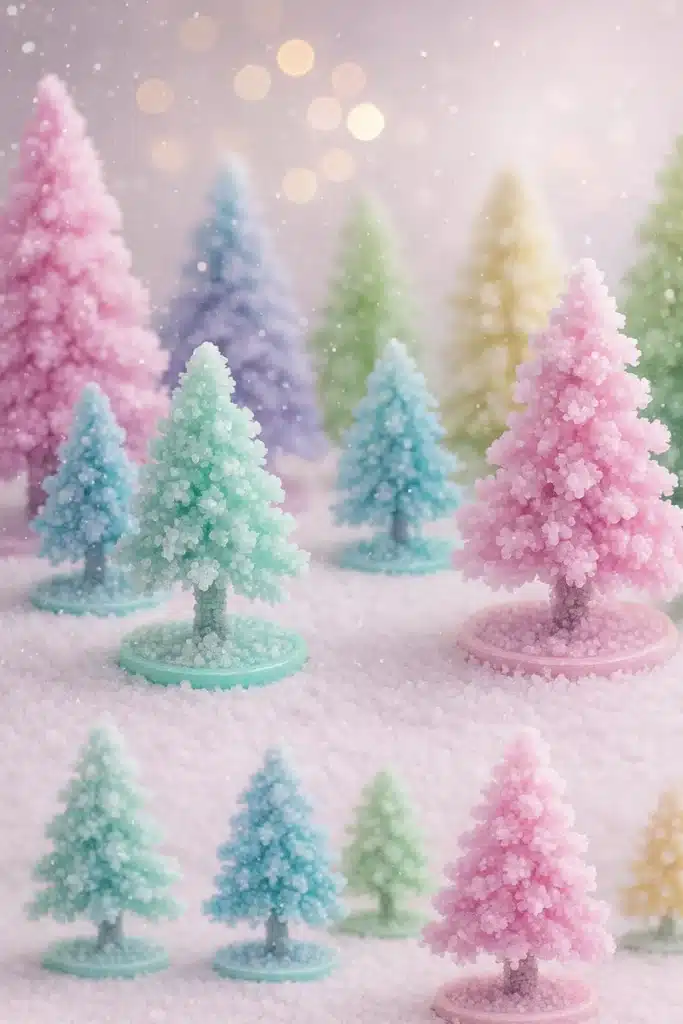
- Colored Crystals – If you used food coloring in the mix, your trees already pop with color. But you can also paint the dry crystals gently with watercolors for extra flair.
Theme It Up
My niece made a whole Christmas village using green pipe cleaner trees and tiny cotton snow mounds. I once went full sci-fi and did blue crystals with silver glitter — looked like a frozen alien planet. Get creative! You can turn this experiment into seasonal decor, party centerpieces, or even handmade gifts.
Display Tips
Use a white tray or plate as your “land.” Want it to last longer? Spray it lightly with hairspray — yeah, weird, but it helps preserve the crystals. Just don’t touch them too much. These things are fragile.
I usually put our best trees on the windowsill where they catch the light in the morning. They seriously sparkle like frost on a cold window.
Decorating your baking soda crystal forest is where the real magic kicks in. It’s where kids can unleash their creativity, and adults can pretend they’re just “helping” while secretly having the time of their lives. Whether you go minimalist or full glitter explosion, the display is your own little world — and that’s pretty special.
Cleaning Up and Keeping It Safe
Alright, so the fun part’s done, the crystals are poppin’, and now it’s… cleanup time. Cue the sad trombone. But honestly? It’s not that bad — unless you went rogue with glitter. Then… Godspeed, friend.
Easy-Peasy Cleanup
Once your crystal forest has lived its best life, you can toss the baking soda water right down the sink. Just run some hot water after it to make sure it doesn’t clump in the pipes. It’s not toxic or dangerous, but you don’t want your kitchen smelling like stale science.
As for the containers? A quick scrub with dish soap does the trick. Those pie tins or trays usually come out sparkling — kinda ironic, right?
Handle With Care
Those crystals? Gorgeous, but super delicate. One sneeze and you’ve got sparkly snowflakes all over the floor. I recommend moving your creation gently, and keeping curious little fingers away (learned that the hard way when my toddler tried to “pet” a crystal tree).
Also, they don’t last forever. Humidity can make them shrink or dissolve over time. So take pics! That way you still have proof of your masterpiece before it disappears like Cinderella’s carriage.
Keep It Kid-Safe
This experiment is mostly safe — no fire, no chemicals, no sketchy fumes. But still, some common-sense safety tips:
- Don’t let toddlers eat the baking soda. I mean, obviously.
- If using food coloring, protect your counters (it will stain laminate).
- Make sure your workspace is stable and not near electronics or pets.
Bonus Tip: Store Leftovers
Got extra baking soda? Toss it in a labeled container and stash it for next time. Trust me — once you’ve done this once, your kids (or inner child) will want to do it again.
Cleanup might not be the glamorous part, but keeping things tidy and safe means you get to enjoy the experiment and avoid the dreaded glitter-in-the-toothbrush situation. Worth it.
And that’s a wrap! Who knew a box of baking soda and a few pipe cleaners could create something so dang magical? Whether you’re wrangling a group of bored kids on a rainy day or just need a screen-free activity that’s actually fun (and sneaky-educational), these DIY baking soda growing trees are total gold.
You’re not just making sparkly decorations — you’re diving into STEM activities for kids, learning about evaporation, exploring crystal chemistry, and maybe even sparking a lifelong love of science. Not bad for a kitchen-table experiment, huh?
We’ve covered the setup, the science, the decoration ideas, and even how to clean the whole thing up without losing your mind (or your favorite sponge). And if your forest turned out half as cool as ours did, you’re probably already thinking about making another one.
So here’s my ask: Share your forest on Pinterest. Seriously — snap a pic of your glittery trees, upload it, and inspire another parent or teacher to give it a shot. Trust me, it’s the kind of project that deserves to be seen.
Let’s spread the sparkle. 🌟