Remember the thrill of watching something glow in the dark as a kid? What if you could make that magic at home—with just a few pantry staples? In this hands-on DIY guide, you’ll learn how to make a swirl glowing bounce ball that’s stretchy, squishy, and yes, it actually glows. It’s a super fun way to introduce kids to chemical reactions and polymers—without needing a science lab. Whether you’re looking for a rainy-day activity or want to jazz up a homeschool science project, this is your go-to craft. Let’s bounce into it!
What You’ll Need to Make a Glowing Bounce Ball
Okay, so let’s be honest—I’ve definitely bought those overpriced DIY science kits before, thinking they’d be a hit. You know the ones, packed like treasure chests but half full of glitter and air? Yeah. This homemade version? Way cheaper, more fun, and surprisingly science-y.
Here’s what you’ll need—and you probably already have most of it in your kitchen (or at least down the craft aisle at Target):
🧂 The Must-Haves:
- 1/2 cup warm water – Not boiling, just warm enough to dissolve stuff.
- 1 tablespoon borax – You can find this in the laundry section (who knew?!).
- 1 tablespoon cornstarch – Basic pantry hero.
- Mixing bowl + spoon – Don’t use your fancy ones unless you wanna explain why it’s neon green.
Now here’s where it gets fun—and glowy.
✨ The Glow & Swirl Extras (Trust Me, They’re Worth It):
- Glow-in-the-dark powder – This is the secret sauce. Look for non-toxic, craft-grade glow powder online. I grabbed mine from Amazon under $10, and it lasts forever.
- Food coloring – Pick 1–2 colors if you want that marble swirl look. Neon blue + pink? Total galaxy vibes.
- Latex gloves (optional) – Learned this the hard way when my hands turned Hulk green.
I didn’t realize it at first, but the glow-in-the-dark powder is where the magic happens. It’s the same stuff used in high-end STEM toys and craft supplies for kids that promise an “educational experience.” But here? You’re making it from scratch. No $30 price tag.
💡 Tips From Trial (and Error):
- Don’t overdo the glow powder—just a pinch will light it up like a firefly.
- If the cornstarch clumps, stir slooowly. It thickens fast.
- I once tried glitter… big mistake. Looked cool but didn’t bounce at all. Total Pinterest fail.
So before you run out buying an overpriced DIY science kit, check your cupboards first. This project is budget-friendly, kid-approved, and yep—it’ll even get those little brains thinking about polymers and reactions without them even knowing it.
And pro tip: get an extra pack of glow powder. Because once the kids see it light up? They’ll want to make, like, ten.
How to Mix and Swirl Your Glow Ball Ingredients
Alright, let’s get messy—in the best way possible. This step is where your kids science experiment starts to feel like real magic. The first time I did this, I thought, “Okay, no way this gloopy mess turns into a bouncy ball.” But spoiler alert: it totally does.
I like to set this part up like a mini lab. Old baking sheet underneath, apron on the kiddo, and that excited little face ready to mix.
🥄 Step 1: Mix the Borax Solution
Pour that 1/2 cup of warm water into a small bowl. Then drop in 1 tablespoon of borax. Give it a solid stir until it looks clear-ish. I’ve had a few times where I didn’t mix long enough and the powder clumped—so stir longer than you think.
This part’s the base of your polymer activity—you’re kickstarting the science already!
🌽 Step 2: Add the Cornstarch (a.k.a. The Thickener)
Sprinkle in 1 tablespoon of cornstarch like you’re seasoning fries. Then stir sloooowly. Seriously. Stir too fast and it’s like wrangling slime. The mixture thickens up real quick—almost like pudding that’s had a rough day.
This step blew my mind. It goes from watery soup to weird stretchy goo, and it’s the first hint that your DIY bouncy ball kit is coming together.
🎨 Step 3: Swirl in the Color (Don’t Overdo It!)
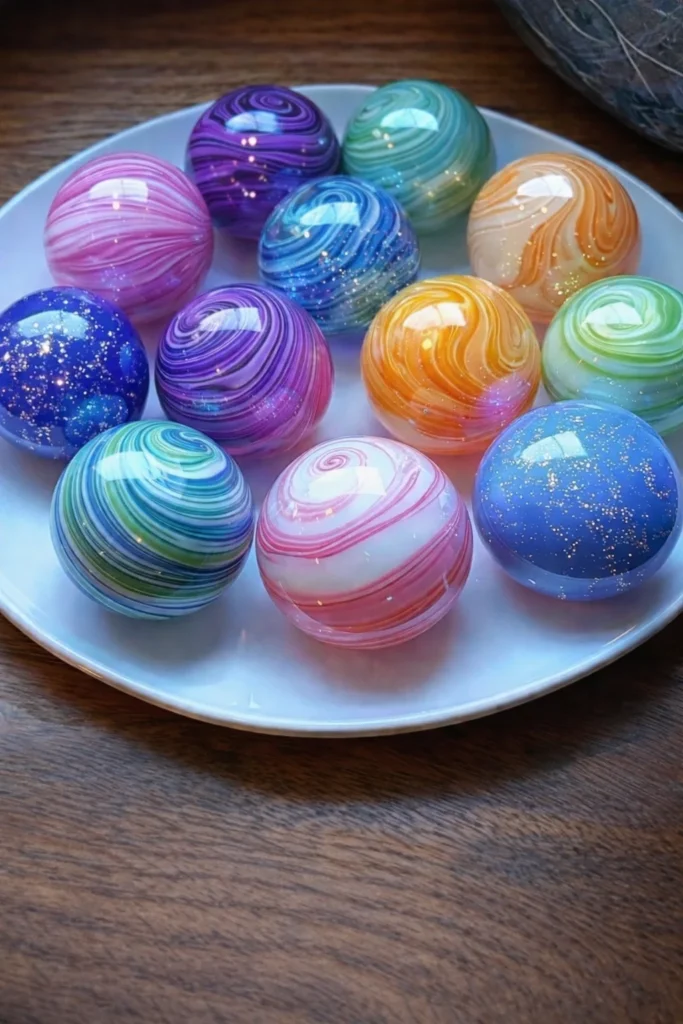
Now, for the swirl. Drop in 1–2 drops of food coloring, but don’t stir like a maniac. Fold it. Gently. Like you’re making a marble cake or tie-dye. Too much stirring and the colors mix into mud—ask me how I know.
When I did this with my niece, we used purple and lime green. It looked like monster guts and she was so into it. The swirl made it feel like something from a science fair and an art class.
🙌 Mistakes I’ve Made (So You Don’t Have To):
- Once added too much food dye—it stained the counter and the dog. Oops.
- Overmixed the swirl one time and it turned brown. Like, sad brown.
- Forgot to dissolve borax completely once… ball came out lumpy and crumbly.
If you’re doing this as part of a glow in the dark craft afternoon or looking for easy STEM projects for kids, this is the step to let them go wild—but not too wild. Keep it hands-on but slightly controlled chaos.
Trust the swirl. It’s what gives your ball that cool, cosmic look. And don’t worry if it looks weird in the bowl. The magic happens when you pick it up.
Adding the Glow – Light Up the Fun
This part? This is where kids lose their minds—in a good way. The swirl is cool, sure. But when the ball starts glowing like a radioactive alien egg? Game over. Everyone’s hooked.
If you’re going for that “wow” factor (and let’s be real, you are), adding glow-in-the-dark powder is the MVP move. It’s the same stuff they use in glow powder for crafts and high-end DIY kits. But here, you’re using it your way—for a science-meets-play masterpiece.
✨ What Kind of Glow Powder Works Best?
Look for non-toxic, craft-grade glow powder. You can get it online super cheap—I got a pack for like $8 and it’s lasted me three projects and counting. The brighter the color, the better the glow. Green and blue usually charge the fastest and glow the longest.
Avoid the super fine stuff made for nails. That dust gets everywhere and doesn’t even glow that well. Go for medium-grain powder—kid-safe, bright, and easy to mix.
Bonus: Good glow powder makes this a perfect glowing sensory toy for younger kids too.
🌈 How to Add It Without Killing the Swirl
This is the trickiest bit. Sprinkle just a small pinch (like 1/8 teaspoon) over your swirl mixture and gently fold it in. Don’t stir too much or you’ll wreck your cool marble pattern.
I did this wrong the first time. Dumped in too much and it just looked like I rolled the ball in flour. Still glowed, but it wasn’t cute.
🔦 Charge It Right – No Batteries Needed
Once your ball is shaped (don’t worry, we’ll cover that next), you’ll want to charge it under a bright light for about 1–2 minutes. I use a flashlight or even my phone’s LED. Then flip the lights off and boom—instant neon orb.
You can even tape a little card on the wall: “Glow Test Zone.” My nephew thought it was “official science lab stuff.”
If you’re into STEM activities at home or looking to make a DIY light-up toy, this glow trick brings serious value. You’re turning kitchen ingredients into a legit glowing object. No batteries. No screen time. Just brains, hands, and a little bit of chemistry.
And don’t be surprised when your kid starts showing everyone in the dark closet. It’s practically a light show.
Shaping the Ball – Hands-On Polymer Science
Okay, now comes the moment of truth. You’ve got your gooey, swirly, glow-packed mixture. It looks like alien yogurt and feels like cold snot. Gross? Maybe. But also… super cool. This is where polymer science works its magic—and trust me, the kids go nuts for it.
The first time I did this, I had no idea it would actually bounce. I was just hoping it didn’t glue itself to the table. But with a little patience (and a lot of rolling), it turned into a bonafide ball. A glowing, swirled, bouncy miracle.
🧤 Step 1: Time to Get Hands-On
Once the mixture gets too thick to stir, scoop it out with your hands. Yeah, it’s sticky at first—like melted slime. But this is the part where it starts to change. Roll it between your palms gently. Then a bit firmer. Then full-on massage mode.
What’s happening? You’re working those long-chain polymers, baby. It’s like kneading dough, but for a DIY bouncy ball kit.
Science lesson in disguise: the more you roll, the more the borax-crosslinked polymer chains tighten and bounce back. (Boom, polymer science experiment unlocked!)
🤯 Mistakes You’ll Probably Make (and That’s Okay)
- Too dry? You might’ve added too much borax or cornstarch. Add a few drops of warm water and roll again.
- Too sticky? Let it rest 30 seconds before handling. I once spent 10 minutes peeling sticky bits off my kid’s hands.
- Flat and sad? You didn’t roll long enough. This isn’t a one-and-done—it takes a good 2-3 minutes of rolling to get that perfect bounce.
I once got lazy and just handed my niece the goo too early. It flattened like a pancake and she named it “Slobber Blob.” Cute, but… not quite what we were going for.
⚙️ The Science Behind the Bounce
This is where you drop some knowledge—especially if you’re doing this as a kids STEM learning project. Explain how polymers are long chains of molecules that stretch, connect, and trap all that water and color. When rolled, they tighten and turn solid (ish), making the ball bounce instead of splat.
It’s honestly one of the best hands-on science activities I’ve found that actually teaches something—and doesn’t cost $40 from some online STEM shop.
Give your ball a good rest (1–2 minutes), and boom—it’s playtime.
Science Behind the Bounce – Why It Works
Here’s where it gets nerdy—in the best possible way. Because yeah, glowing bouncy balls are fun, but when your kid suddenly says “Wait… this is science?!” you know you’ve struck STEM education gold.
I’ll admit it—I used to be the “do the fun stuff, skip the science” kind of person. But once I learned what was actually happening inside this gooey ball? Total lightbulb moment. And now I always explain it, because it makes the bounce way cooler.
🧬 The Polymer Connection
So, the secret behind the magic is this: polymers. When you mix borax and cornstarch into water, they start to link up into long, stretchy chains—kind of like cooked spaghetti that sticks together. That’s what makes the ball stretchy and rollable.
Borax acts like a cross-linker—it grabs those chains and ties them together. The result? A squishy-solid that’s firm enough to roll and soft enough to bounce. That’s basic polymer science, and it’s surprisingly easy to explain to kids.
Want a fun fact? Slime, rubber bands, and even Jell-O all rely on similar polymer action.
⚗️ Chemical Reactions for Kids—Without the Boring Stuff
I always tell kids: “We’re not just making a ball. We’re making molecules dance.” And that gets their attention.
The food coloring doesn’t change the chemistry, but it does help show how everything blends (or doesn’t). And the glow-in-the-dark powder? It’s made of phosphors—special materials that absorb light and then slowly release it. It’s like charging a solar battery, but way cooler.
This kind of chemical reaction for kids is perfect because it’s visual, hands-on, and instantly satisfying. No waiting for days. No weird fumes. Just glow, bounce, and science.
🔍 Why It Bounces (and Sometimes Doesn’t)
The bounce comes from elasticity. If the chains are linked just right, the ball compresses on impact and springs back up. But too much powder, not enough rolling, or a bad borax mix? It’ll go splat instead of spring. And yes—I’ve made at least three splat balls. (Still fun, though.)
If you’re using this for a science craft for kids or a homeschool activity, it’s a great moment to ask questions:
- What happens if we use cold water?
- What if we skip the cornstarch?
- Can we make it glow more?
Little experiments like that turn this from a one-and-done craft into an actual STEM tool for discovery. And honestly, it’s more fun when stuff goes a little wrong. That’s when the learning kicks in.
So yeah—it’s just a ball. But behind the bounce? It’s chemistry, baby.
And there you have it—a bouncy, glowy, swirly masterpiece born from a few pantry staples and a splash of curiosity. Who knew STEM projects for kids could feel more like magic than schoolwork?
From mixing up borax and cornstarch to swirling in food coloring and glow powder, every step of this project is a mini lesson in DIY science activities—and your kids won’t even realize they’re learning. They’ll be too busy bouncing their new creation off every wall in the house (sorry about that in advance).
Whether you’re a homeschool parent, a teacher looking for a quick win, or just a curious adult who loves glowing crafts (no judgment here), this project checks all the boxes:
- Affordable ✅
- Educational ✅
- Just plain fun ✅
And here’s the best part—once you’ve made one, you’ll want to make more. Different colors, bigger batches, maybe even scented ones (trust me, peppermint bounce balls are wild). It’s one of those educational toys you can make at home that keeps evolving with your kid’s curiosity.
If you loved this project or want to inspire other science-loving families, pin it to your DIY board on Pinterest and share the glow! 🌟