Ever seen a lava lamp come to life in the dark, glowing like a sci-fi scene? I remember the first time I made a glowing bubble lamp with my niece—her eyes lit up brighter than the glow stick inside the jar! These DIY Glowing Bubble Lamps are more than just a crafty experiment. They’re perfect for sparking curiosity, exploring science, and creating a calm, magical atmosphere. Using basic stuff like oil, water, and Alka-Seltzer, you’ll witness an epic bubbling dance of glowing blobs. Let’s bring a splash of wonder into your room—ready to get glowing?
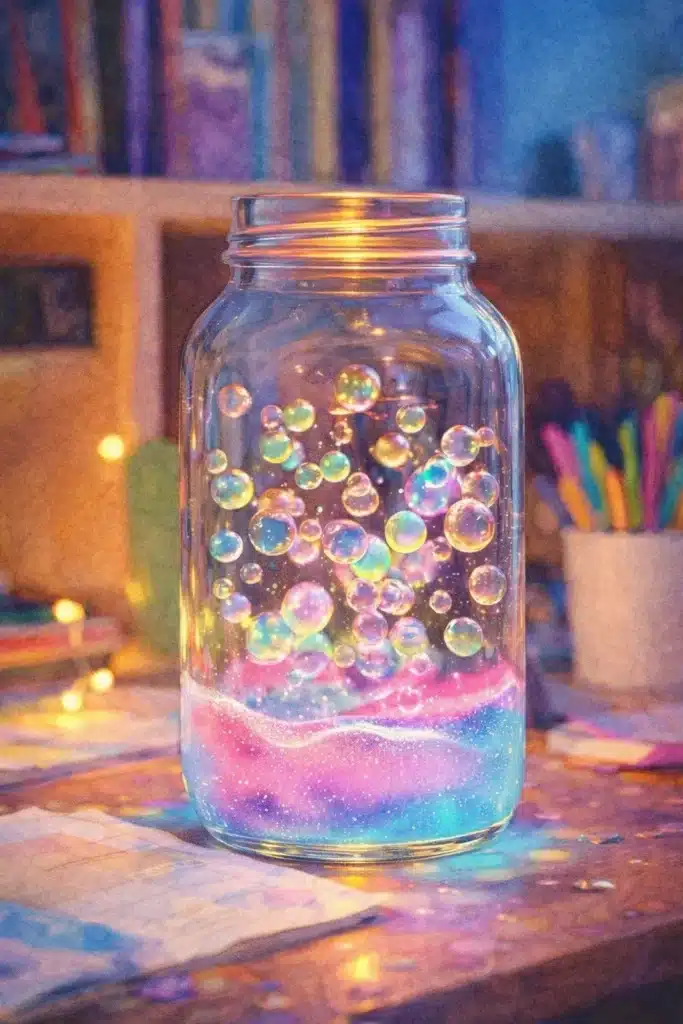
What You’ll Need to Make a DIY Glowing Bubble Lamp
You ever start a “simple” DIY project and realize halfway through that you’re missing, like, five basic things? Yep—been there, done that. That’s why I always start with a checklist now, especially when I’m doing something like a DIY glowing lamp. Trust me, this project is super easy if you’ve got all the stuff on hand. And chances are, you do.
My No-Stress Supply List
1. A tall, clear jar or bottle
I’ve used both old mason jars and even empty soda bottles. Just make sure it’s see-through so you can really enjoy those glowing, lava-style bubbles. Wide-mouth jars are great for curious little hands too.
2. Water (3/4 full)
Room temp works best. If you go cold, the bubbles seem a bit sluggish—like they’re trying to wake up on a Monday.
3. Baby oil or vegetable oil (top it off)
Baby oil gives a cleaner, more polished look, but I’ve definitely used cooking oil in a pinch. The key here is to pour sloooowly so you get that clean oil-on-water separation. That layered look is the start of your homemade lava lamp magic.
4. Glow sticks (or glow-in-the-dark liquid)
This is the fun part. I recommend using non-toxic glow sticks. Just snap ‘em, shake ‘em, and snip one end to pour the glowing liquid in. It looks super cool in a dark room, especially for kids science activities or even a chill nightlight situation. Just be careful—this part’s messy. Wear gloves if you’re fancy. 😆
5. Alka-Seltzer tablets
Break these into a few chunks. These guys are the real MVP—without them, there’s no bubbling. I learned the hard way once when I forgot them on a camping trip with my niece. Had everything else… just no fizz. Total letdown.
6. Optional: Food coloring
This isn’t required, but a few drops can really jazz things up. We tried blue one night and my son said it looked like “alien goo.” I mean… that’s a win, right?
Quick Tips I Wish I Knew Earlier
- Don’t overfill the jar—it’ll overflow when the bubbles get going.
- If you’re doing this with kids, set everything up on a tray or cookie sheet to contain spills.
- Want to reuse the lamp later? Pop a lid on it and store it in a dark place.
I seriously love making this homemade lava lamp during rainy weekends. It’s like combining a craft and a science lesson all in one glowing, fizzy, hypnotic jar. Plus, it’s one of those sensory bottles that actually keeps them engaged past the usual 5-minute mark. (Parents, you feel me?)
How to Assemble Your Glowing Bubble Lamp
Okay, so once you’ve got your supplies all lined up, it’s time to get this DIY lava lamp going. This part is where the real fun begins. It’s kinda like a kitchen chemistry show—but with fewer explosions and more glow.
Step 1: Fill It Up Right
Start by filling your jar about ¾ of the way with plain old water. I’ve found it helps to let the water sit for a bit to reach room temperature—cold water messes with the bubble action for some reason.
Then, pour the baby oil in sloooowly. Seriously, go slow here. If you rush it, the layers get all murky and weird. The oil should float on top like a golden layer of magic. If you’ve got a little helper (like I usually do), this is a cool moment to explain liquid density. Makes it sneakily educational, right?
Step 2: Add the Glow
Now for the “glow in the dark science” moment. Crack your glow stick, shake it like you mean it, and snip the end open—carefully. I always hold it over the jar and pour slowly. The glowing liquid makes these thin, luminous ribbons that swirl into the mix. Just don’t let your kid do this part alone. One wrong squeeze and you’ll have glow juice on the ceiling. (Don’t ask.)
If you’re skipping glow sticks and using glow paint or liquid, a few drops will do. And this is where I add 1–2 drops of food coloring too. One drop turns the whole thing into this deep cosmic swirl. Blue and purple look especially awesome in a dark room.
Step 3: Wait a Sec
Let everything settle for about 30 seconds before moving on. That gives the layers time to re-separate. Don’t shake it or stir—just let the magic line up like it’s supposed to. This is where I grab a snack or yell “NO TOUCHING!” five times if I’m working with kids. 😅
Lessons I Learned (The Hard Way)
- Don’t overfill the jar. Leave at least an inch at the top so you’ve got space for the bubbling later.
- Always test one glow stick first. I once had a dud that looked awesome… until it turned out to be a weak glow that fizzled in 10 minutes.
- Set it on a dark tray or towel. Trust me on this—things glow better and the mess stays contained.
This is hands-down one of my favorite kids learning activities because it mixes curiosity, colors, and a touch of science. It’s simple enough to do on a school night and flashy enough to feel like a legit STEM experiment. Plus, my daughter says it looks like “space soup,” so… win-win.
Let the Glowing Magic Begin – Creating the Bubble Reaction
Alright, you’ve got your glowing concoction all layered and looking awesome. Now it’s time for the real wow moment—the bubbling reaction! This part turns your peaceful little glowing jar into a full-blown light show. It’s like fireworks… but in a bottle.
Step 1: Grab an Alka-Seltzer
Break one tablet into three or four pieces. I always keep a little stash of these in a zip bag now because my kids always want to do “just one more!” later. You’d think I was handing them treasure.
Now drop one piece in the jar—and step back!
Almost instantly, it starts fizzing at the bottom. You’ll see glowing blobs rising up like tiny jellyfish, then drifting back down as the fizz fades. It’s part DIY sensory bottle, part lava lamp, and part mini science fair rolled into one. Pure joy, honestly.
Step 2: Keep the Party Going
As soon as it slows down, just toss in another chunk. The reaction resets and off it goes again. I like to challenge the kids to count how long the bubbles rise before they stop—it turns into a fun little STEM timer game. (Hey, we call it science, not stalling bedtime.)
We’ve even tried experimenting with tablet size:
- Bigger chunk = faster fizz but shorter life
- Smaller piece = slower reaction, lasts longer
It’s a cool way to sneak in a STEM science experiment without them even realizing they’re learning. 😎
A Few Things I’ve Messed Up Before
- I once added two full tablets at once. Thought it’d be awesome. Instead, I got overflow and a sticky glowing mess on my counter. Start small. Trust me.
- Glow sticks that aren’t fully activated = meh effect. Snap and shake well before opening.
- Tried to reuse old tablet pieces once. Nope. Dead fizz. Always use fresh ones.
Why This Never Gets Old
This whole thing is straight-up mesmerizing. Every time we make it, I hear gasps or giggles—especially when we turn off the lights and it glows like some deep-sea alien pod. It’s one of those science projects for kids that actually holds their attention longer than a TikTok dance. And for me? It’s the easiest win ever. No batteries, no wires, just a simple bubbling wonder.
Honestly, you’ll want to do this again even after the kids go to bed. And hey, I won’t judge.
Tips for Kids & Safety Notes
So here’s the thing—this glowing bubble lamp is super cool, but you’re still working with breakable stuff, fizzing tablets, and glowing liquid. I’ve done this with toddlers and tweens, and let me tell you, safety makes or breaks the experience.
Safety First, Fun Always
1. Supervise anything glow-related
Glow sticks look like harmless fun—and they mostly are—but once you snip them open, they’re not for unsupervised hands. The liquid is labeled “non-toxic,” but that doesn’t mean you want it in anyone’s mouth or eyes. I wear gloves when pouring just to be safe, and I keep it away from the littles.
2. Use non-toxic materials only
Always double-check the packaging. I made the mistake once of grabbing some random off-brand glow sticks. They were labeled for “outdoor use only” and smelled weird. Not worth it. Stick to craft-store or science kit options if you can.
3. Keep a lid nearby
Especially with younger kids. Once the bubbles start fizzing and glowing, their instinct is to SHAKE the jar like it owes them money. 😬 A lid helps cut down on chaos—plus it makes your DIY sensory bottle last longer if you want to reuse it later.
4. Do it on a tray or towel
It’s a game-changer. I learned this after my 6-year-old sent a glowing geyser across our table. Now I prep on a baking tray or even outside when the weather’s good. Way less cleanup.
Making It a Kid-Friendly DIY Hit
What I love about this project is that it’s one of the rare STEM activities for kids that doesn’t feel like a forced lesson. It’s safe and magical if you set it up right. Here’s how to make it a hit:
- Let them choose the glow colors—it gives them ownership of the process.
- Turn off the lights and add dramatic music. Seriously, try the “Stranger Things” soundtrack and tell them it’s alien science. Instant engagement.
- Give each kid their own jar (even if it’s smaller) so no one’s fighting for turns.
What I’d Never Do Again
- Never leave the lamp unsupervised with the top open. One sibling fight and that jar becomes a glow bomb.
- Never substitute baking soda and vinegar for Alka-Seltzer. I tried that once and ended up with a glow volcano. Cool, but messy.
- Never let pets near it. Our cat knocked one off the counter and glowed for 10 minutes. Not ideal.
This project is the definition of safe science experiments if you take a few smart precautions. It’s not just hands-on learning—it’s a whole moment. The kind of thing your kids will beg to do again next week… or tomorrow. And if I’m being honest, it’s a little bit of magic for grownups too.
Science Behind the Bubbles – What’s Happening?
Okay, time to geek out a little. If your kids are anything like mine, they start asking, “Why does it do that?” the second the glowing blobs start dancing. Luckily, this is one of those kids science experiments where you actually can explain it without needing a PhD.
The Layered Look: Density in Action
So first things first—this is a density experiment. You’ve got two liquids: water and oil. And oil floats because it’s less dense than water. Sounds simple, right?
But watching it happen? That hits different.
You pour in the water, then the oil, and they don’t mix. Ever. Like oil and water… because it literally is oil and water. 😄 When you add the food coloring or glowing liquid (which mixes with the water), it sinks right through the oil and settles at the bottom. Science magic, baby.
Bubble Time: Chemical Reactions FTW
Now for the cool part—the chemical reaction for kids. The Alka-Seltzer tablet reacts with the water (not the oil!) and starts fizzing. That fizz is carbon dioxide gas. The gas grabs onto blobs of water and glow juice and lifts them up through the oil layer like little lava balloons.
Once the gas escapes at the top, the heavier water drops right back down.
Up. Down. Up. Down. It’s like a bubbly science ballet.
A Real STEM Learning Activity
The best part? This whole thing sneaks in tons of STEM learning without any worksheets or eye-rolls. You’re hitting chemistry (reactions), physics (density), and even a little bit of sensory exploration with all that glow and movement.
And let’s be honest—I’m learning stuff too. I had no clue how cool this would be until I saw it bubbling for the first time. I was legit standing there like, “Wait… is that how lava lamps work?!”
A Few Smart Talking Points (If You’re Teaching)
- “Why doesn’t the oil mix with the water?” – Because it’s lighter (less dense) and hydrophobic (doesn’t like water).
- “Where do the bubbles come from?” – The Alka-Seltzer creates carbon dioxide gas when it reacts with water.
- “Why do the blobs fall back down?” – Once the gas escapes, gravity pulls the heavier liquid down.
These answers made me feel like the Cool Science Parent™ for a solid 15 minutes.
Honestly, it’s the kind of thing that makes science feel fun. You’re not reading about reactions—you’re watching them happen. Glowing, bubbling, floating proof that learning can look like magic.
And there you have it—your very own DIY glowing lamp that’s equal parts science, craft, and pure entertainment. Whether you’re making it with your kids, your class, or just because you’re a grown-up who loves glowing stuff (no shame!), this little project seriously delivers.
We’ve done this as a bedtime wind-down, a weekend boredom buster, and even as a birthday party activity. Every single time, it’s a hit. It’s that rare combo of “easy to make,” “super cool to watch,” and “teachable moment,” which makes it the ultimate STEM project for kids.
Plus, when the lights go off and that glow kicks in? It’s kinda magical.
If you give this a try, I’d LOVE to see your glowing creations. Share your photos and tag them on Pinterest—your version might just inspire someone else to dive into this glow in the dark craft too.
📌 Pin this project to save it for later and spread the glow! ✨
Because honestly, the world could use a few more glowing bubble lamps… and a lot more fun learning moments.