Ever seen a Christmas tree grow crystals overnight? Sounds like holiday magic, right? Well, it’s actually just a cool combo of kitchen science and creative fun! This frosty craft is perfect for curious kids, hands-on learners, or anyone looking to add some sparkle to their holiday decor. With just Borax, pipe cleaners, and a jar, you’ll grow your own icy wonderland in no time. Bonus: it’s educational and looks stunning on a windowsill!
What You’ll Need to Make Crystal Christmas Trees
I remember the first time I tried to grow my own crystal Christmas tree—I nearly melted a plastic cup and forgot the glitter. Total rookie mistake. 😅 But I’ve learned my lesson! If you’ve got curious kids or just love DIY holiday science projects, here’s what you actually need to pull it off smoothly.
Essential Supplies for This Frosty Science Experiment
- Borax powder – This is the magic ingredient. Don’t skip it. You’ll need about 3 tablespoons for every 1 cup of boiling water.
- Boiling water – Use a kettle for this. Pour carefully, and don’t let kids handle it without supervision.
- Large glass jar – Mason jars work great. Just make sure it’s heat-safe.
- Pipe cleaners – Get festive: white, silver, or blue work best for a winter vibe.
- String or thread – You’ll use this to hang your little tree in the solution.
- Pencil or chopstick – To suspend the tree across the jar opening.
- Scissors – For trimming your pipe-cleaner into that classic tree shape.
- White glitter – Totally optional, but man it makes them pop!
- Blue food coloring – Adds an icy tint to the water for more wintery vibes.
When I first did this, I thought I could sub in baking soda. Spoiler: it does not work. Stick with Borax. If you don’t have any, it’s super cheap on Amazon or at most stores under cleaning supplies.
Safety First: It’s Still a Chemistry Project
This whole project might feel like crafting, but it’s got a serious science experiment side too. Borax isn’t toxic, but it’s not something you want in your eyes or mouth either. I always do this one with my kids watching and me pouring. Gloves? Optional. Supervision? Non-negotiable.
If you’re thinking of turning this into a full-blown STEM holiday lesson, you might even want to snag a science experiment kit that includes Borax and other chemistry-safe materials.
Oh—and don’t forget to protect your workspace. I once did this on a wooden table and ended up with a sparkly ring etched into the finish. Throw down some newspaper or an old tray first. Trust me.
Step-by-Step Instructions for Growing Crystals
I’ve messed this up so many times—like that year I forgot to stir the Borax properly and ended up with… well, just colored water and soggy pipe cleaners. 😩 If you want those sparkly, snow-covered trees that actually wow people, follow these steps exactly. It’s easy once you know how to do it right.
Step 1: Build Your Pipe-Cleaner Tree
Start with a white or silver pipe cleaner and twist it into a tree shape. It doesn’t have to be perfect—lopsided looks kind of cute, honestly. Add a few small branches by wrapping shorter pieces around the “trunk.” Once you’ve got your mini DIY Christmas tree, tie a string to the top so it can hang down into the jar later.
Pro tip: Make sure the tree is small enough to fit into the jar without touching the sides. If it does, the crystals won’t form evenly.
Step 2: Make the Borax Solution
This part’s the science! Pour boiling water into your jar and then add Borax powder—about 3 tablespoons per cup. Stir until it’s totally dissolved. You want a saturated solution. If it looks cloudy or grainy, keep stirring.
Want extra holiday vibes? Add a few drops of blue food coloring and a pinch of glitter. The food coloring gives the tree a cool icy-blue tint, and the glitter makes it look like snow under sunlight.
Honestly, this step always makes me feel like I’m doing some kind of magic potion stuff—except it’s just basic chemistry. 🤓
Step 3: Suspend the Tree
Place the pencil (or stick) across the top of the jar and hang the tree so it dangles freely in the solution. No touching the bottom or sides, okay? That part’s important.
Then… just walk away.
Let it sit overnight in a quiet spot where it won’t get bumped. I usually put a towel around the jar just to hold in the warmth a little longer, which seems to help with crystal growth.
Step 4: Let the Crystals Grow
This is where the real magic happens. As the water cools, the Borax crystals start to form and attach to your pipe-cleaner tree. By morning, it’ll look like your little tree just walked out of Narnia. ❄️
Every time I check it in the morning, I still gasp. It never gets old seeing those shimmering crystals coat the branches. It’s like you just made your own DIY crystal ornament without needing a store-bought kit.
The Science Behind the Crystals
Okay, confession time: the first time I did this with my nephew, I totally pretended I knew the science. I said, “We’re just growing snowflakes!” 😅 But later I looked it up—and wow, it’s actually super cool.
If you’ve ever wondered why the crystals grow on those little trees, here’s the fun (and actually pretty easy-to-grasp) explanation.
It’s All About a Supersaturated Solution
The moment you dissolve Borax powder into hot water, you’re making what’s called a supersaturated solution. Basically, hot water can hold more Borax than cold water. So when it cools down, the water can’t “hold” all that Borax anymore… and it has to let go.
Where does that Borax go? It clings to any surface it can find—like your fuzzy little pipe-cleaner tree.
So those sparkly crystals? They’re actually the Borax re-forming as the water chills. And they do it in a super orderly, geometric way. That’s why the shapes are sharp and icy-looking—kind of like natural snowflakes or salt crystals.
Why Pipe Cleaners Work So Well
Here’s a little fun fact: the fuzz on pipe cleaners gives the Borax tiny spots to cling to, kind of like climbing holds on a rock wall. More texture = more crystal growth. Smooth surfaces just don’t cut it.
That’s why a science experiment kit with textured materials always gets better results. But honestly, a regular pipe cleaner does the job perfectly for this one.
Real STEM Learning Disguised as Holiday Fun
What I love most about this project is how sneaky it is. Like—kids think they’re doing a fun winter craft, but really, they’re diving into chemistry. 🙌 It’s hands-on, visual, and the results are instant.
Want to make this into a full educational STEM activity? Try asking questions like:
- “What would happen if we added more Borax?”
- “What if the water wasn’t hot enough?”
- “Do crystals form faster in a colder room?”
You’ll end up with a kitchen full of mini experiments and a sparkly forest of science-powered trees.
Tips for Making It Even More Magical
Alright, so once you’ve got the basic crystal trees down, it’s time to bling them out. Honestly, after my third or fourth batch, I started getting a little obsessed with making each one look like a tiny enchanted tree from a snow globe. Here’s how to level it up from science fair to Pinterest-worthy.
Color Themes Are Everything
One year, I went full Frozen theme—blue food coloring, silver pipe cleaners, and extra fine glitter. It looked like Elsa herself dropped them off on my shelf. 😍
But don’t be afraid to mix it up! Gold pipe cleaners with red glitter? Super cozy and warm. Or go all white for that classic snowy winter decoration vibe. You can even let each kid pick their own colors to make a personalized little forest.
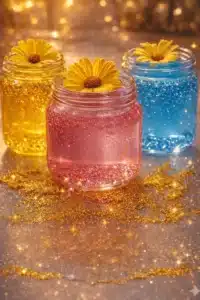
Bonus idea: dye the water different colors in different jars. You’ll get a range of shades in your DIY Christmas decorations.
Add Fairy Lights for Extra Glow
If you’ve got tiny battery-powered LED lights, wrap them around your finished tree once it’s dry. I did this last year on a whim, and it took the project from “cute” to “is this from a holiday catalog?” The crystals catch the light and sparkle like crazy—it’s straight-up magical.
Just make sure the crystals are 100% dry before adding anything electrical. (Yep, I learned that one the hard way. 😬)
Use Them as Homemade Winter Ornaments
Here’s where it gets cool: tie some string or ribbon to the top and turn your crystal tree into a Christmas ornament. I gave them out as gifts one year and people couldn’t believe I made them at home. “Wait, these are real crystals?” Yep. And made with stuff from under the kitchen sink.
You can also hot glue them to little wooden bases and create a whole snowy holiday centerpiece. Throw in some faux snow, pinecones, and maybe a cinnamon stick or two? Boom—instant holiday craft idea.
Create a Whole Crystal Forest
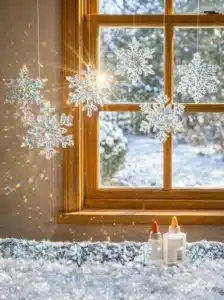
Once I got the hang of it, I started making trees of all sizes—some short and wide, others tall and skinny. If you line them up on a windowsill with some fake snow or cotton batting, it looks like a tiny frozen forest.
We even gave our crystal trees names like “Frosty,” “Jingletwig,” and “Sparklebeard.” It became a full-on holiday tradition in our house.
If you’ve made it this far, congrats—you’re officially part crafter, part chemist. 🎉 Growing your own DIY Crystal Christmas Trees is more than just a fun weekend activity. It’s a full-blown holiday STEM project, a hands-on lesson in chemistry, and one of the most beautiful things you can make with a handful of household supplies.
What I love most? Every single tree turns out different. Some are bushy with thick clusters. Others are delicate and frosty like snowflakes caught mid-fall. They’re unpredictable in the best way—just like snow days or little kids’ laughter.
Whether you’re doing this as a Christmas craft for kids, giving them away as homemade ornaments, or just filling your windowsill with frosted sparkle, this project brings that rare mix of wonder and wow. It’s one of those rare crafts that kids, parents, and even science teachers can all get excited about.
So grab your Borax powder, twist up some pipe cleaners, and start your snowy experiment. And hey—if you’re proud of how yours turned out, share it! Snap a pic and post it on Pinterest. Spread the sparkle!

That looks way cool. I’ll have to try it with the Grandboyz.
Luv this
Very pretty.How do you get them out of the jar to hang as christmas ornaments
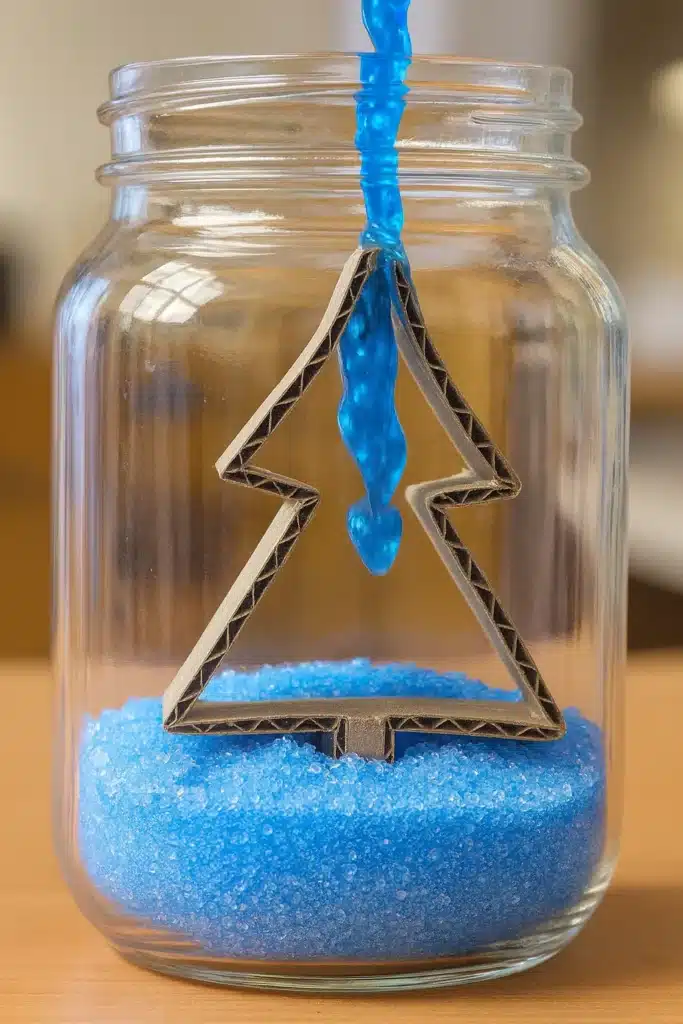
How come the first pic looks like cutout cardboard