Banh beo recipe creates delicate Vietnamese steamed shrimp cakes that are crispy on the outside and tender inside. This banh beo recipe represents a beloved street food from Central Vietnam, featuring a thin, lacy crepe topped with succulent shrimp, pork cracklings, and fragrant fried shallots. The banh beo recipe is surprisingly simple to master once you understand the batter consistency and steaming technique. These authentic banh beo cakes deliver complex textures and flavors in each delicate bite, making them perfect for appetizers, lunch, or a Vietnamese feast. Whether you are a seasoned cook or exploring Vietnamese cuisine for the first time, this banh beo recipe delivers restaurant-quality results in your home kitchen.
| Prep Time | Cook Time | Total Time | Servings | Difficulty | Cuisine |
|---|---|---|---|---|---|
| 20 minutes | 25 minutes | 45 minutes | 4 servings (12 cakes) | Intermediate | Vietnamese |
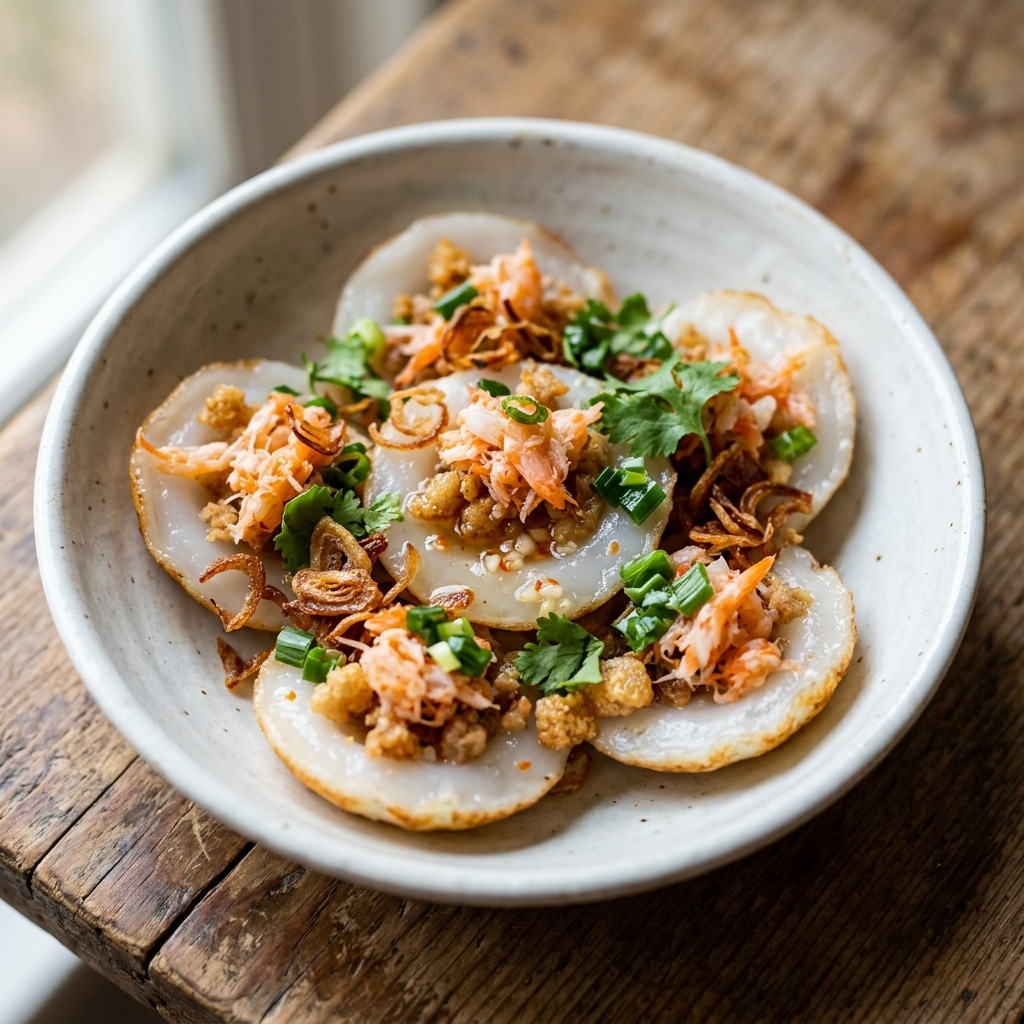
Table of Contents
Table of Contents
Why This Banh Beo Recipe Works
The banh beo recipe succeeds because it balances textural contrast with vibrant flavors that define Vietnamese street food culture. The thin, crispy rice cake layer develops a lacy, golden exterior when steamed properly, while the center remains delightfully tender and slightly chewy. This banh beo recipe transforms simple ingredients into an elegant dish that restaurant chefs and home cooks alike prize for its sophisticated presentation and approachable preparation.
What makes this banh beo recipe truly special is the interplay of textures and temperatures in each bite. The steaming process creates a naturally crispy outer rim without deep frying, making this banh beo recipe lighter than many Vietnamese appetizers yet equally satisfying. The combination of succulent shrimp, crispy pork cracklings, and fragrant fried shallots provides a multidimensional eating experience that keeps diners coming back for more.
Home cooks appreciate this banh beo recipe because it requires minimal equipment beyond a standard bamboo steamer and simple pantry ingredients. The banh beo recipe demonstrates that authentic Vietnamese cooking does not demand exotic tools or hard-to-find components. Once you master the batter consistency and steaming timing, producing beautiful banh beo becomes repeatable and reliable.
The flavor profile of this banh beo recipe showcases the Vietnamese principle of balancing sweet, salty, sour, and spicy elements. The nuoc cham dipping sauce amplifies each banh beo cake with its bright lime juice, pungent fish sauce, and gentle heat. This banh beo recipe makes an impressive presentation for dinner parties while remaining simple enough for weeknight entertaining.
Banh Beo Recipe Ingredients
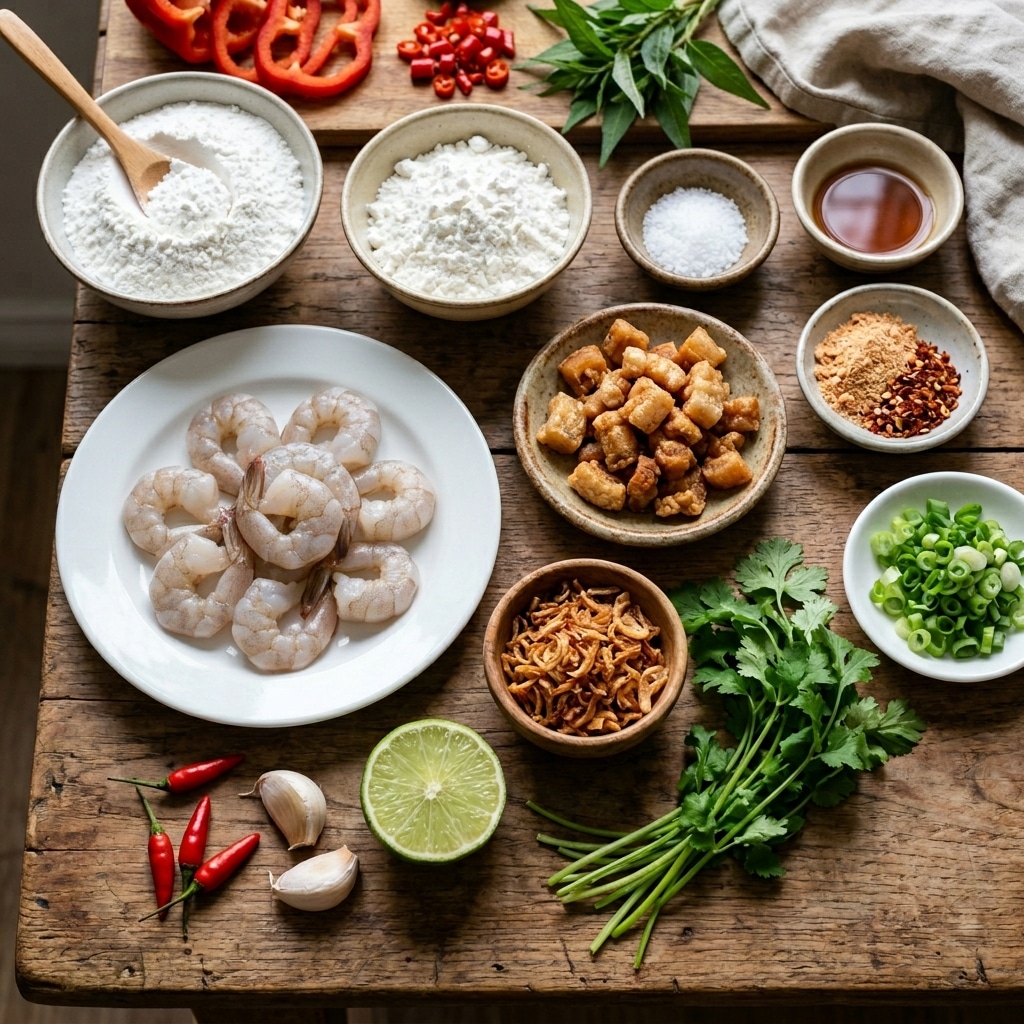
Gathering quality ingredients ensures your banh beo recipe turns out perfectly textured and flavorful. The banh beo recipe relies on precise measurements and fresh components to achieve the signature crispy-yet-tender consistency that defines this Vietnamese favorite.
| Ingredient | Quantity | Notes with Alternatives |
|---|---|---|
| Rice flour | 1 cup | Use finely milled rice flour for smooth batter. Tapioca starch works as emergency substitute but changes texture. |
| Cornstarch | 1/4 cup | Adds crispiness to edges. Essential for banh beo texture; do not omit. |
| Water | 1.5 cups | Use filtered or tap water at room temperature. Boiling water changes batter viscosity. |
| Salt | 1/2 teaspoon | Enhance batten flavor. Sea salt or kosher salt both work equally well. |
| Shrimp, small | 12 ounces | Peeled and deveined. Frozen shrimp thawed works fine; pat dry before using. |
| Pork cracklings | 1/4 cup | Use prepared chicharrones or make by frying pork skin. Crispy texture essential. |
| Fried shallots | 3 tablespoons | Store-bought or homemade. Adds aromatic depth and crispy texture. |
| Cilantro, fresh | 1/4 cup, chopped | Use fresh Vietnamese cilantro if available; regular cilantro substitutes well. |
| Green onion | 2 tablespoons, sliced | White and light green parts only. Substitute with chives if unavailable. |
| Fish sauce | 2 tablespoons | Non-negotiable for authentic banh beo flavor. Essential Vietnamese ingredient. |
| Lime juice, fresh | 2 tablespoons | Bottled lime juice acceptable but fresh delivers superior brightness. |
| Garlic, minced | 2 cloves | For dipping sauce. Use fresh garlic for best flavor in banh beo sauce. |
| Bird’s eye chili | 1, optional | Adds heat to dipping sauce. Omit for mild banh beo or use red pepper flakes. |
| Sesame oil | 1 teaspoon | Drizzle over finished banh beo for nutty aroma. Do not cook with it. |
| Oil for greasing | 2 tablespoons | Use neutral oil like vegetable or canola oil for steaming vessels. |
This banh beo recipe ingredient list focuses on authentic Vietnamese components that create the traditional flavor and texture profile. The banh beo recipe works best when you source genuine fish sauce and fresh herbs from Asian markets.
How to Make Banh Beo Recipe
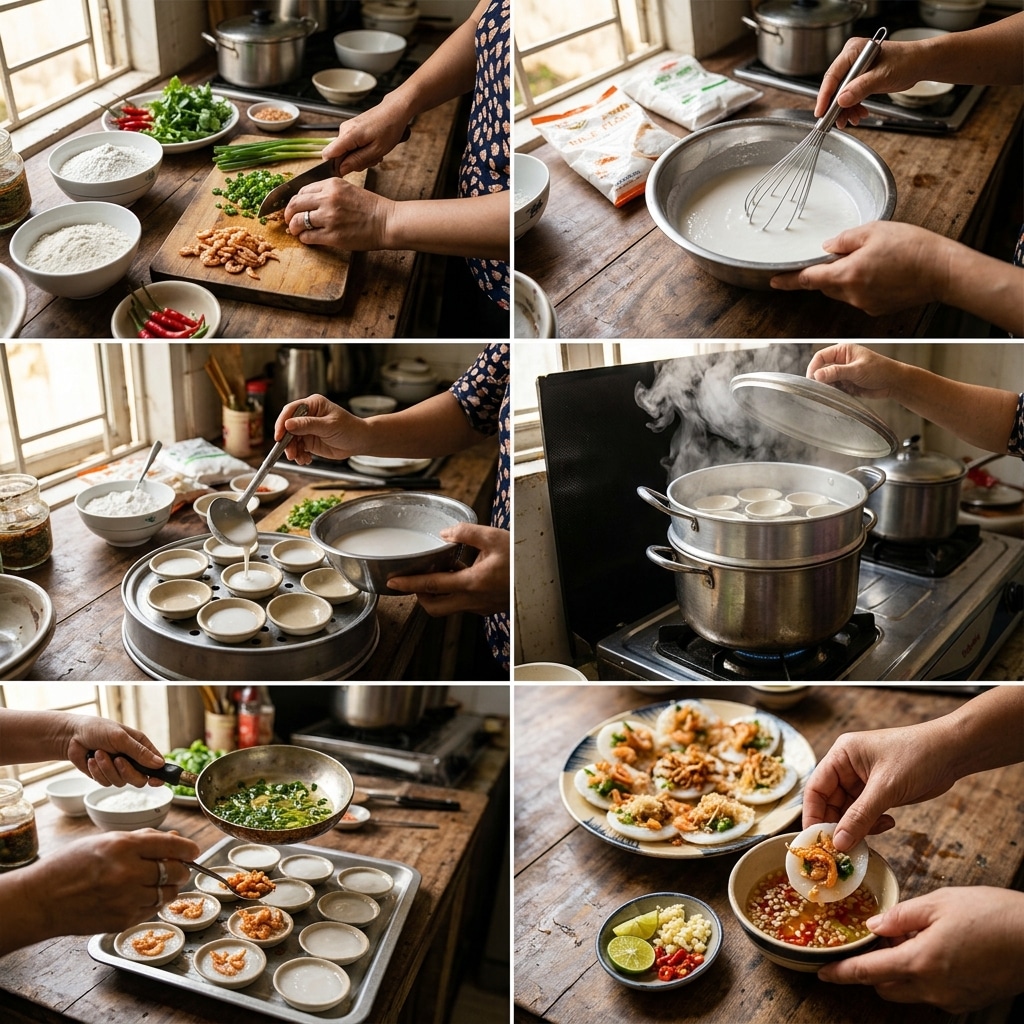
Making banh beo recipe requires attention to batter consistency and steaming technique, but the process moves quickly once you understand each phase. This banh beo recipe yields beautiful results through careful execution of simple steps.
Prepare Your Steaming Setup
- Fill a large pot with water about two inches deep and bring to a gentle boil over medium-high heat for your banh beo recipe.
- Position a bamboo steamer basket over the water, ensuring the basket sits above the water level while making banh beo.
- Oil twelve small ceramic or silicone banh beo molds (about two inches diameter) or use the bottom of a muffin tin as molds.
- Arrange oiled molds inside the steamer basket in a single layer for even cooking of banh beo recipe.
Create the Batter for Banh Beo
- Whisk together rice flour and cornstarch in a large mixing bowl for banh beo recipe.
- Add water gradually while stirring constantly to create a smooth batter without lumps for banh beo recipe.
- Season batter with salt and mix thoroughly until banh beo batter reaches the consistency of thin crepe batter.
- Let batter rest for five minutes at room temperature before steaming banh beo.
Steam the Banh Beo Cakes
- Pour approximately two tablespoons of batter into each oiled mold for banh beo recipe.
- Place steamer basket over boiling water and cover with the bamboo steamer lid for banh beo.
- Steam banh beo for five to six minutes until the batter sets but the center remains slightly soft.
- Remove steamer basket from heat and open the lid carefully away from your face when making banh beo.
Top the Banh Beo
- Place two to three pieces of cooked shrimp on top of each steamed banh beo cake.
- Sprinkle pork cracklings, fried shallots, cilantro, and green onion over each banh beo for garnish.
- Drizzle a few drops of sesame oil over the finished banh beo cakes.
Prepare Nuoc Cham Sauce for Banh Beo
- Combine fish sauce, lime juice, water, minced garlic, and sliced chili in a small bowl for banh beo recipe.
- Stir the sauce thoroughly until the banh beo dipping sauce tastes balanced with salty, sour, and spicy notes.
- Let the banh beo sauce rest for five minutes before serving to allow flavors to meld.
Chef Tips for Perfect Banh Beo Recipe
These expert tips transform your banh beo recipe from good to restaurant-quality through careful attention to timing and technique. Professional banh beo makers rely on these details to ensure consistent, beautiful results every time they prepare banh beo.
- Achieve the ideal banh beo texture by maintaining batter consistency similar to thin crepe batter; if too thick, the banh beo becomes tough; if too thin, the banh beo lacks structure and becomes fragile.
- Steam banh beo over gentle boiling water rather than rolling boil, which causes the banh beo batter to puff up irregularly and develops thick, doughy centers instead of tender, delicate cakes.
- Use a bamboo steamer for authentic banh beo results because metal steamers conduct heat unevenly and create uneven browning on the edges of your banh beo recipe.
- Pat shrimp completely dry before topping banh beo because excess moisture creates soggy spots and compromises the crispy-tender banh beo texture.
- Prepare the nuoc cham sauce at least ten minutes before serving banh beo to allow the garlic and chili flavors to develop fully in the banh beo dipping sauce.
- Add toppings to banh beo immediately after steaming while the cakes are still warm, which helps the pork cracklings retain maximum crispiness on your banh beo.
Common Banh Beo Recipe Mistakes to Avoid
Understanding typical banh beo pitfalls helps you troubleshoot issues and produce perfect banh beo every time. Experienced cooks learn from banh beo mistakes to refine their technique and deliver exceptional results.
Mistake: Overmixing the Batter Many home cooks overmix the banh beo batter, developing gluten strands that make the finished banh beo tough and chewy rather than tender. Mix banh beo batter just until combined with no visible flour streaks; lumps disappear during steaming and do not affect banh beo texture.
Mistake: Using Boiling Water That is Too Aggressive Rolling boil creates excessive steam that unevenly cooks the banh beo, resulting in thick, doughy centers with crispy edges that do not deliver the signature banh beo texture. Maintain gentle boiling water that produces steady steam without violent bubbling when steaming banh beo.
Mistake: Steaming Banh Beo Too Long Overcooking banh beo causes the delicate rice cakes to become thick, dense, and rubbery, losing the tender center that makes banh beo special. Aim for five to six minutes steaming time for banh beo; check doneness by observing that the edges are set while the center remains soft when testing banh beo.
Mistake: Not Oiling the Banh Beo Molds Properly Inadequately oiled molds cause banh beo cakes to stick, tearing when removed and destroying the presentation of your banh beo. Oil molds generously with neutral oil and wipe away excess to achieve non-stick banh beo molds.
Mistake: Using Low-Quality Pork Cracklings Stale or soft pork cracklings ruin the textural contrast that defines excellent banh beo. Source fresh, very crispy pork cracklings from Vietnamese markets and add them to banh beo immediately before serving to preserve maximum crispness.
Mistake: Adding Toppings Too Far in Advance Toppings added more than a few minutes before serving banh beo absorb moisture and lose their crispy texture, compromising the banh beo eating experience. Top banh beo only after all cakes are steamed and ready to serve.
Best Banh Beo Recipe Variations and Substitutions
The traditional banh beo recipe welcomes creative modifications while maintaining the authentic essence of this Vietnamese favorite. Explore these banh beo variations to customize the banh beo recipe for different occasions, dietary preferences, and ingredient availability.
| Ingredient | Substitution | Impact on Flavor |
|---|---|---|
| Shrimp | Crabmeat or scallops | Creates richer, sweeter banh beo with different marine flavor profile; maintains authentic seafood character. |
| Pork cracklings | Crispy onions or toasted breadcrumbs | Reduces banh beo richness and creates lighter texture; vegetarian-friendly banh beo variation. |
| Cilantro | Vietnamese mint or Thai basil | Shifts herbaceous notes in banh beo to different aromatic profiles; maintains fresh character. |
| Fish sauce | Soy sauce (vegetarian banh beo) | Creates milder banh beo with less umami intensity; banh beo loses some authentic Vietnamese flavor. |
| Rice flour | Tapioca flour | Banh beo becomes more translucent and chewy; texture changes significantly from traditional banh beo. |
| Traditional banh beo molds | Silicone muffin cups or ceramic ramekins | Larger banh beo cakes require extended steaming time; final banh beo texture remains similar. |
This banh beo recipe accommodates vegetarian versions by omitting pork cracklings and adjusting the fish sauce in the dipping sauce. A traditional banh beo recipe maintains its essential character through core components like the rice flour batter and steaming technique.
Creating dairy-free banh beo presents no challenges since the banh beo recipe contains no dairy products. Those following gluten-free diets should verify that their fish sauce meets gluten-free standards when preparing banh beo.
Serving Suggestions for Banh Beo Recipe
Present banh beo recipe as a starring appetizer at Vietnamese gatherings or family dinner celebrations. The delicate banh beo works beautifully as part of a composed Vietnamese menu featuring complementary dishes.
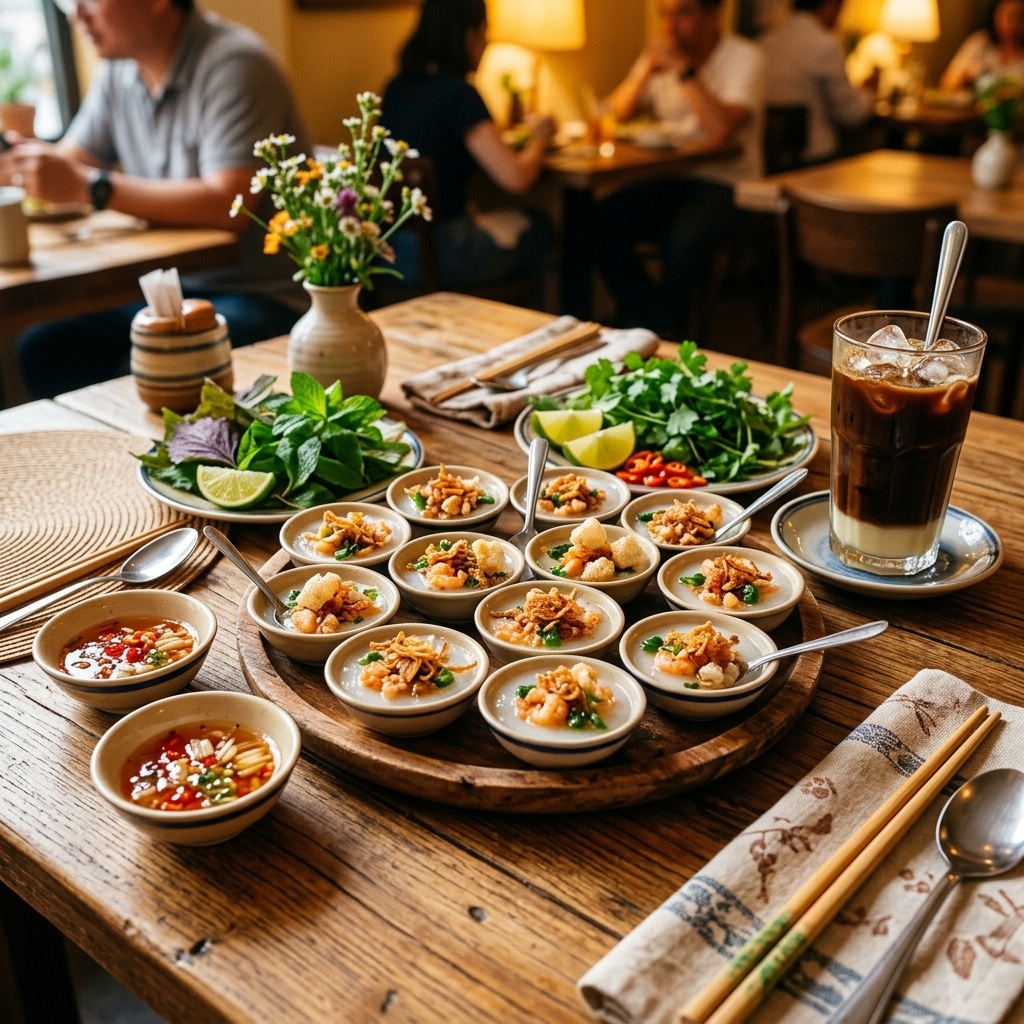
Serve banh beo recipe with ice-cold Vietnamese iced coffee or crisp Asian beers for an authentic pairing experience. Complement banh beo with other Vietnamese appetizers like spring rolls, satay skewers, or crispy banana blossoms for a spectacular spread. The nuoc cham sauce perfectly accompanies banh beo and should be served in small individual bowls so diners can dip each banh beo cake to taste.
Banh beo recipe makes an impressive lunch for entertaining friends or family; pair the banh beo with fresh Vietnamese salads featuring herbs, vegetables, and lime vinaigrette. Serve banh beo as part of a Vietnamese meal prep collection that includes pho, vermicelli bowls, or clay pot dishes. The banh beo recipe serves beautifully at casual weeknight dinners for those craving Vietnamese street food flavors at home.
Banh beo recipe garnished with extra cilantro and sesame seeds creates an visually stunning presentation that impresses guests immediately. Arrange banh beo on a wooden platter with fresh herbs, lime wedges, and a small bowl of dipping sauce at the center for a traditional serving style. Warm banh beo tastes best; serve immediately after steaming for optimal banh beo texture and temperature.
Storage and Reheating for Banh Beo Recipe
Banh beo recipe stores well when handled properly, allowing you to prepare banh beo in advance for entertaining or meal planning. Understanding proper banh beo storage techniques preserves texture and food safety while maintaining excellent banh beo quality.
| Method | Duration | Instructions |
|---|---|---|
| Room temperature | 1 to 2 hours | Cover banh beo loosely with plastic wrap to prevent drying. Banh beo remains best served warm but stays edible at room temperature for entertaining. |
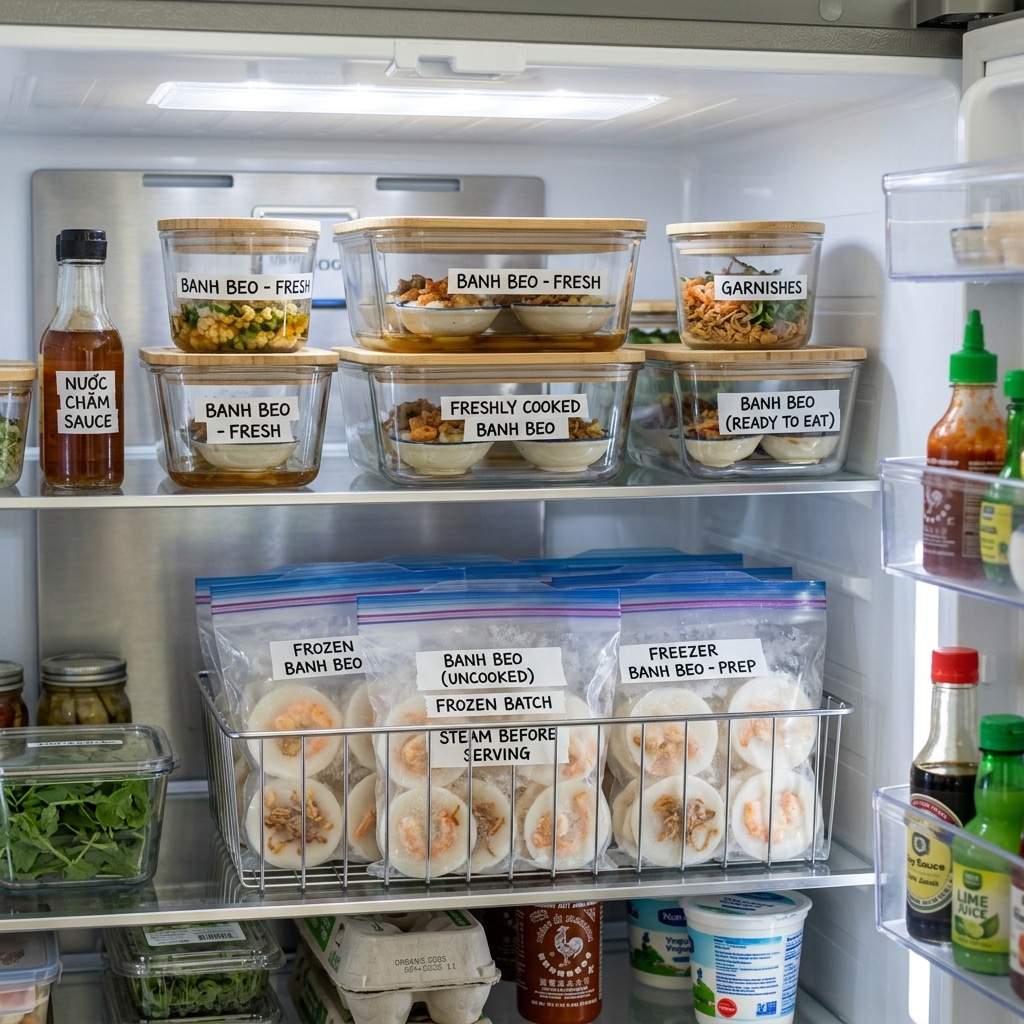
| Refrigerator | 3 to 4 days | Store banh beo in airtight container after cooling completely. The banh beo loses some crispiness but remains safe and flavorful for reheating. |
| Freezer | 2 to 3 weeks | Freeze banh beo in single layer on sheet tray before transferring to freezer bags. Banh beo texture changes slightly after freezing but remains acceptable. |
| Reheating (steamed banh beo) | 5 minutes | Place banh beo in steamer basket over gentle boiling water for 5 minutes to restore banh beo warmth and partially restore crispiness. |
| Reheating (microwave) | 30 to 60 seconds | Wrap banh beo in damp paper towel and microwave on 50% power. Microwave method softens banh beo texture but works for quick reheating. |
| Make-ahead (uncooked banh beo) | 8 hours | Prepare banh beo batter up to 8 hours ahead and refrigerate covered. Steam the banh beo fresh on serving day for optimal banh beo texture. |
Banh beo recipe batter can be prepared one day ahead if covered tightly in the refrigerator, making this banh beo recipe convenient for entertaining. Prepare shrimp toppings and fried shallots the morning of serving to maintain maximum banh beo crispiness and freshness.
Do not add fresh cilantro, green onion, or sesame oil to banh beo until immediately before serving, as these delicate garnishes do not reheat well. Store the nuoc cham sauce separately from the banh beo; the sauce keeps refrigerated for up to three days in an airtight container.
Nutritional Information for Banh Beo Recipe
Understanding the banh beo recipe nutrition profile helps you incorporate this Vietnamese favorite into balanced meal planning. The banh beo recipe delivers lean protein and moderate calories while providing essential micronutrients from seafood and fresh herbs.
| Nutrient | Amount per Serving (per banh beo cake) |
|---|---|
| Calories | 85 to 95 |
| Protein | 7 to 9 grams |
| Fat | 3 to 4 grams |
| Carbohydrates | 8 to 10 grams |
| Fiber | 0.5 grams |
| Sugar | 0.2 grams |
| Sodium | 280 to 320 milligrams |
Approximate values based on banh beo recipe using standard ingredients and serving size of one banh beo cake. The banh beo recipe nutrition varies slightly depending on topping portions and preparation methods. Shrimp provides the primary protein in this banh beo recipe while rice flour contributes most carbohydrates.
Frequently Asked Questions About Banh Beo Recipe
Can I make banh beo without pork cracklings?
Yes, you can make vegetarian banh beo by substituting crispy fried onions, toasted breadcrumbs, or crispy tempeh for pork cracklings. This banh beo variation creates lighter flavor while maintaining textural contrast, though it lacks the rich, savory depth that traditional pork cracklings bring to banh beo.
What is the correct texture for perfectly cooked banh beo?
Perfectly cooked banh beo features a set, slightly firm exterior with a tender, slightly soft center that wobbles gently. The edges of banh beo should appear slightly crispy and golden while the middle of banh beo remains creamy and delicate, creating the signature textural contrast that defines excellent banh beo.
How do I know when banh beo is done steaming?
Banh beo is done steaming when the batter sets around the edges but the center still jiggles slightly when you gently shake the steamer basket. After five to six minutes of steaming banh beo, carefully open the steamer lid and observe that the banh beo edges are opaque while the center remains glossy, indicating perfectly steamed banh beo.
Can I use frozen shrimp for banh beo recipe?
Frozen shrimp works perfectly for banh beo recipe as long as you thaw it completely and pat it very dry before using it as banh beo topping. Excess moisture from frozen shrimp makes the banh beo soggy, so thorough drying before adding frozen shrimp to banh beo is essential.
What can I use instead of fish sauce in banh beo?
Soy sauce creates an acceptable vegetarian banh beo sauce alternative, though banh beo loses some authentic umami depth from traditional fish sauce. For best results maintaining banh beo authenticity, use genuine fish sauce; vegetarian banh beo enthusiasts appreciate the banh beo made with quality soy sauce.
How long does banh beo stay fresh after cooking?
Banh beo stays fresh for two hours at room temperature before the banh beo begins losing its crispy texture. Refrigerated banh beo keeps for three to four days, though reheated banh beo texture differs from freshly steamed banh beo.
Can I freeze banh beo before or after cooking?
Yes, freeze banh beo after cooking by placing individual banh beo cakes on a sheet tray, freezing until solid, then transferring frozen banh beo to freezer bags for storage. Frozen banh beo keeps for two to three weeks; thaw banh beo overnight in the refrigerator before reheating by steaming.
What is the best bamboo steamer size for making banh beo?
A ten-inch bamboo steamer comfortably fits twelve banh beo cakes in a single layer, allowing even heat distribution for perfectly steamed banh beo. Use a twelve-inch banh beo steamer for easier access and better steam circulation if available, as larger banh beo steamers provide more consistent banh beo cooking.
How do I adjust banh beo recipe for high altitude cooking?
At high altitude, increase the steaming time for banh beo by one to two minutes since water boils at lower temperatures. Monitor the banh beo closely during steaming to observe when the edges set but the center remains soft, as banh beo cooking times vary with altitude.
Can I add garlic or scallions directly to banh beo batter?
Garlic and scallions release moisture when mixed into banh beo batter, creating soggy, uneven banh beo cakes with poor texture. Keep banh beo batter plain and add aromatics as toppings after steaming to preserve the signature crispy-tender banh beo texture.
Conclusion
The banh beo recipe celebrates the simplicity and elegance of authentic Vietnamese street food by transforming humble rice flour into delicate, flavorful cakes that impress every diner. This banh beo recipe proves that Vietnamese cooking does not require extensive preparation or exotic equipment; banh beo succeeds through understanding fundamental techniques and respecting traditional flavor combinations. Whether you are introducing guests to Vietnamese cuisine or celebrating your heritage through family cooking, this banh beo recipe delivers restaurant-quality results in your home kitchen. The interplay of crispy edges, tender centers, succulent shrimp, and aromatic toppings creates a banh beo experience that exemplifies why this Vietnamese favorite remains beloved across generations. Prepare banh beo with confidence, embrace the simple techniques, and enjoy the delighted reactions when you serve these authentic Vietnamese steamed shrimp cakes at your next gathering. The reward for mastering banh beo is sharing this special Vietnamese treasure with those you love, creating memories through the universal language of delicious, authentic food.
Related Recipes You’ll Love
Pink Bariatric Gelatin Recipe
Cucumber-Apple Cooler Recipe
Yuzu Cheesecake Recipe
Rhubarb Apple And Ginger Crumble Recipe
Morning Glory Vegetable Recipe
Blue Salt Trick Recipe
Bariatric Seed Recipe For Weight Loss
Expert Resources and Food Safety
Eat This Not That Vietnamese food guide provides comprehensive information about Vietnamese cuisine nutrition.
FDA seafood safety guidelines ensure proper handling of shrimp in banh beo preparation.
Print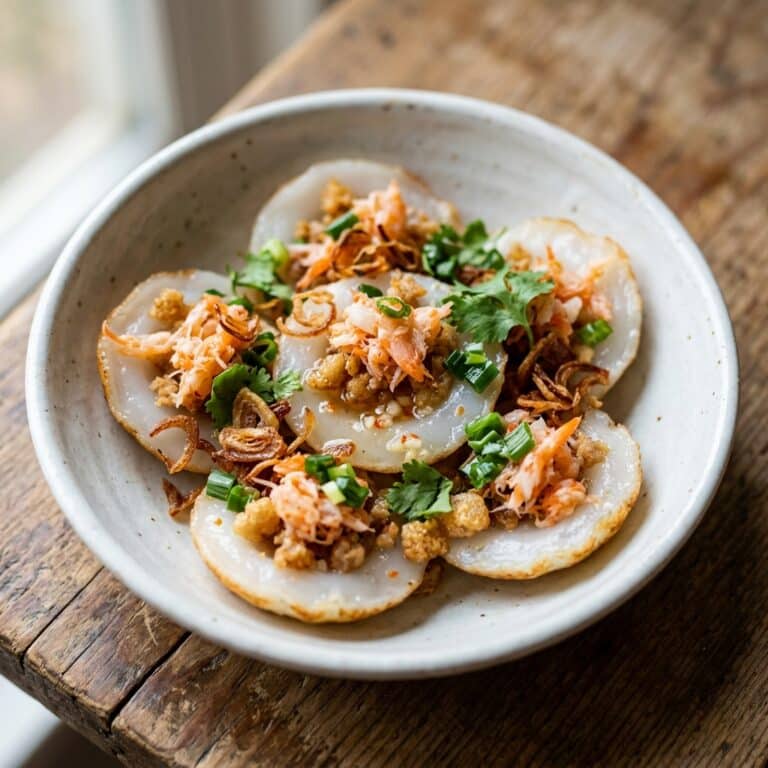
Banh Beo Recipe 2026
Banh beo recipe creates delicate Vietnamese steamed shrimp cakes that are crispy on the outside and tender inside. This banh beo recipe represents a beloved street food from Central Vietnam, featuring a thin, lacy crepe topped with succulent shrimp, pork cracklings, and fragrant fried shallots.
- Total Time: 45 minutes
- Yield: 4 servings (12 cakes) 1x
Ingredients
- 1 cup Rice flour (Use finely milled rice flour for smooth batter)
- 1/4 cup Cornstarch (Adds crispiness to edges. Essential for banh beo texture)
- 1.5 cups Water (Use filtered or tap water at room temperature)
- 1/2 teaspoon Salt (Enhance batter flavor. Sea salt or kosher salt both work)
- 12 ounces Shrimp, small (Peeled and deveined)
- 1/4 cup Pork cracklings (Use prepared chicharrones or make by frying pork skin)
- 3 tablespoons Fried shallots (Store-bought or homemade)
- 1/4 cup Cilantro, fresh, chopped (Use fresh Vietnamese cilantro if available)
- 2 tablespoons Green onion, sliced (White and light green parts only)
- 2 tablespoons Fish sauce (Non-negotiable for authentic banh beo flavor)
- 2 tablespoons Lime juice, fresh (Fresh squeezed delivers superior brightness)
- 2 cloves Garlic, minced (For dipping sauce)
- 1 Bird’s eye chili, optional (Adds heat to dipping sauce)
- 1 teaspoon Sesame oil (Drizzle over finished banh beo for nutty aroma)
- 2 tablespoons Oil for greasing (Use neutral oil like vegetable or canola oil)
Instructions
- Fill a large pot with water about two inches deep and bring to a gentle boil over medium-high heat for your banh beo recipe.
- Position a bamboo steamer basket over the water, ensuring the basket sits above the water level while making banh beo.
- Oil twelve small ceramic or silicone banh beo molds (about two inches diameter) or use the bottom of a muffin tin as molds.
- Arrange oiled molds inside the steamer basket in a single layer for even cooking of banh beo recipe.
- Whisk together rice flour and cornstarch in a large mixing bowl for banh beo recipe.
- Add water gradually while stirring constantly to create a smooth batter without lumps for banh beo recipe.
- Season batter with salt and mix thoroughly until banh beo batter reaches the consistency of thin crepe batter.
- Let batter rest for five minutes at room temperature before steaming banh beo.
- Pour approximately two tablespoons of batter into each oiled mold for banh beo recipe.
- Place steamer basket over boiling water and cover with the bamboo steamer lid for banh beo.
- Steam banh beo for five to six minutes until the batter sets but the center remains slightly soft.
- Remove steamer basket from heat and open the lid carefully away from your face when making banh beo.
- Place two to three pieces of cooked shrimp on top of each steamed banh beo cake.
- Sprinkle pork cracklings, fried shallots, cilantro, and green onion over each banh beo for garnish.
- Drizzle a few drops of sesame oil over the finished banh beo cakes.
- Combine fish sauce, lime juice, water, minced garlic, and sliced chili in a small bowl for banh beo recipe.
- Stir the sauce thoroughly until the banh beo dipping sauce tastes balanced with salty, sour, and spicy notes.
- Let the banh beo sauce rest for five minutes before serving to allow flavors to meld.
Notes
Achieve the ideal banh beo texture by maintaining batter consistency similar to thin crepe batter; if too thick, the banh beo becomes tough. Steam banh beo over gentle boiling water rather than rolling boil, which causes the banh beo batter to puff up irregularly. Use a bamboo steamer for authentic banh beo results because metal steamers conduct heat unevenly. Pat shrimp completely dry before topping banh beo because excess moisture creates soggy spots. Add toppings to banh beo immediately after steaming while the cakes are still warm, which helps the pork cracklings retain maximum crispiness.
- Prep Time: 20 minutes
- Cook Time: 25 minutes
- Category: Appetizer
- Method: Steaming
- Cuisine: Vietnamese
Nutrition
- Serving Size: 1 banh beo cake
- Calories: 90
- Sugar: 0.2 grams
- Sodium: 300 milligrams
- Fat: 3.5 grams
- Saturated Fat: 1 gram
- Unsaturated Fat: 2.5 grams
- Trans Fat: 0 grams
- Carbohydrates: 9 grams
- Fiber: 0.5 grams
- Protein: 8 grams
- Cholesterol: 45 milligrams