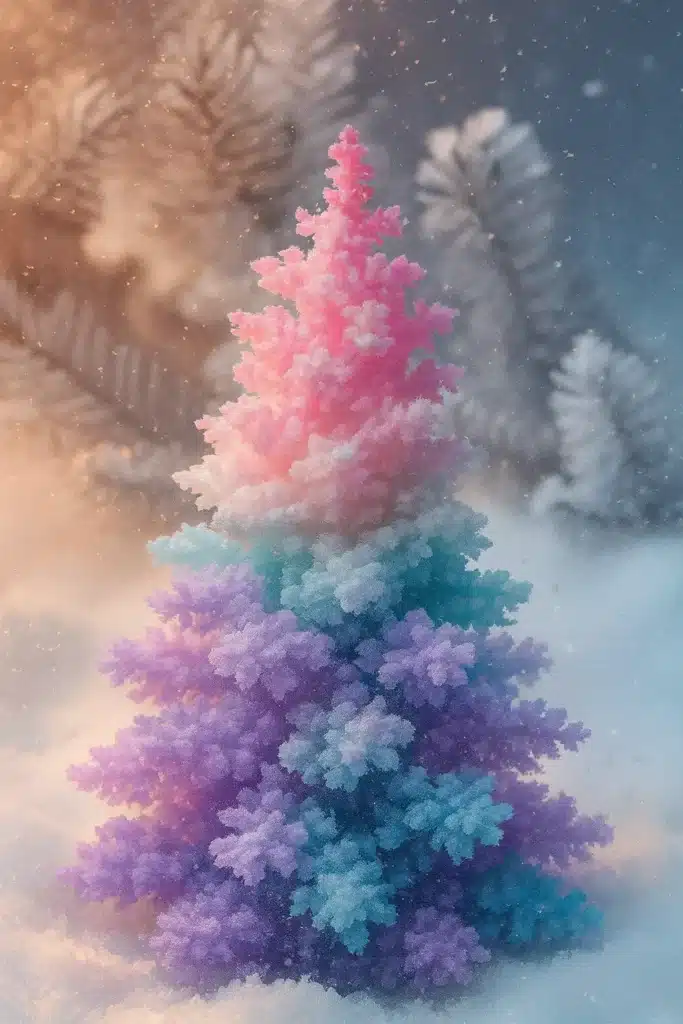
Have you ever wanted to grow your own winter wonderland—right on your kitchen counter? ✨ Whether you’re snowed in or just craving a bit of frosty fun, this Baking Soda Growing Snow Tree Experiment is a hands-on science craft kids (and adults!) can’t get enough of. Just a few pantry items, a splash of creativity, and a little patience can lead to shimmering crystal-covered trees that look straight out of a holiday storybook.
Fun fact: Baking soda (sodium bicarbonate) is behind those sparkling “snowflakes”—a beautiful blend of chemistry and craft. If you’re looking for an educational activity that feels like play, you’re in the right place. Let’s get our snow on!
What You Need to Start Your Snow Tree Science Experiment
Let me tell you about the first time I tried this
It was a snow day, school was out, and my daughter was bouncing off the walls. You know those days where you have to come up with something magical—or lose your mind? That was me. So I grabbed some baking soda and a pipe cleaner and said, “Let’s make snow grow.”
I had no clue if it would work, but wow—it did. Since then, this has become our go-to winter STEM activity, and the kids love setting it up just as much as watching the crystals grow.
Your DIY Crystal Forest Starter Kit
Here’s what you need to get this science experiment for kids going:
- Baking soda (sodium bicarbonate): Just regular kitchen stuff. I’ve found store brands work just as well as name brands.
- Hot water: The hotter, the better—just don’t boil it. You want the baking soda to dissolve fully to create a super saturated solution.
- Shallow containers: Think plastic plates, small dishes, or even a foil-lined baking tray. I once used an old pie tin and it worked great.
- Tree bases: Now here’s where the fun kicks in. Use green pipe cleaners twisted into trees, real twigs from the yard, or cut sponges into tree shapes. One time, we even used a plastic dinosaur and grew “snow” on him!
- Food coloring (optional): For when your kids want blue snow, pink snow, or “rainbow” snow (yes, that was a request).
- Spoon or stir stick: You’ll use this to mix your potion. Wooden chopsticks work great too if you’ve got extras.
The Mistake I Made (So You Don’t)
Okay—real talk. The first time I did this, I didn’t use enough baking soda. My “snow” didn’t really grow—it just looked like soggy white soup. If the solution isn’t thick and gritty, it won’t form crystals. You want it so saturated that there’s undissolved powder left at the bottom.
This little failure turned into a teachable moment for the kids, though. We looked up why it flopped and learned all about crystallization. It became an unexpected educational project that started with a mess and ended with a science win.
Pro Tips for Setup
- Prep the scene together. Kids love creating their own “forests.” I let them place the trees themselves—it gives them ownership.
- Keep your tray level. I once left it on a tilted windowsill… and our snow slid to one side. Whoops.
- Use a drop cloth. If you’re doing this with littles, it will get messy. Trust me.
Whether you’re homeschooling, stuck inside, or just want a cool DIY craft, this baking soda snow tree project is pure gold. Low cost, big impact, and honestly—kinda magical. Your kids get to build, mix, and watch science happen.
And if your house is anything like mine… you’ll end up doing it more than once.
Step-by-Step Instructions for Growing Your Snow Tree
This is where the magic starts
After we gathered all the stuff, my youngest kept asking, “When does the snow grow?” Honestly, I didn’t have a clear answer—because I wasn’t totally sure it would work the first time! But these steps are the heart of this DIY winter experiment. Once you follow them, it’s just a matter of letting time and chemistry do their thing.
Step 1: Set Up Your Winter Scene
Start by placing your “trees” into a shallow container. You want them to stand upright or at least touch the bottom of the dish. We’ve used pipe cleaners twisted into spirals, tiny pine twigs, and even sponge cutouts. The base matters—crystals will form wherever the liquid touches.
Tip: Use a little clay or tape to anchor your trees if they won’t stay upright. One time our pipe cleaner tree tipped over mid-growth, and the crystals looked more like frosty coral than a tree. Still cool—but not what we were going for.
Step 2: Mix the Magic Snow Solution
This part is crucial. In a separate bowl or cup, add about ½ to ¾ cup of baking soda to 1 cup of very hot water. Stir like crazy. You’re aiming for a super saturated solution, meaning the water can’t dissolve any more baking soda. If some stays undissolved at the bottom, that’s perfect.
Pro tip: If your mix looks too watery, add more baking soda. The more saturated, the better your crystal growing science will turn out.
Step 3: Add Food Coloring (If You Want)
Want red, green, or blue snow? Now’s your moment. A few drops of food coloring can turn your snow scene from basic to magical. My kids once made rainbow trees and called it “unicorn frost.” Gotta love their imagination.
But skip the coloring if you want a natural snowy look—it’ll be clearer and look more like ice.
Step 4: Pour and Position
Carefully pour the baking soda solution into your container. You want the liquid to touch the base of every tree or object, but not flood them. If you pour too much, the trees might float or tip (been there).
Leave it in a stable spot—flat, quiet, and out of reach. The crystals will start forming as the water evaporates.
Step 5: Let the Crystals Grow
This is the hardest part for little ones: waiting. Leave your tray undisturbed for several hours or, even better, overnight. I usually sneak a peek after about 6 hours, and sure enough—tiny white specks start appearing like fresh frost.
By morning, it’s a mini crystal forest. The kids’ reactions? Pure amazement. Every. Single. Time.
This isn’t just one of those easy science experiments for kids—it’s a patience builder, a mini chemistry lesson, and a full-on craft rolled into one.
How the Baking Soda Snow Tree Science Works
“Wait… how does it even grow?”
That’s the question my oldest asked after staring at her snow-covered sponge tree for about 10 minutes. And honestly, I had to Google it the first time. But now that we’ve done this project about a dozen times, I’ve got the science side of this chemical reaction experiment down to a tee—and the kids actually love hearing the explanation (especially when I make it sound like a magic trick).
It’s All About Crystallization
Here’s the deal: when you dissolve baking soda (sodium bicarbonate) in hot water, you’re creating what’s called a saturated solution. The water holds as much baking soda as it possibly can. But as the water slowly evaporates, there’s nowhere for all that baking soda to go—so it starts to come out of the solution and stick to things.
And boom: crystals start forming.
It’s exactly how real snowflakes grow in clouds—tiny particles latch onto something and grow as water vapor freezes or crystallizes around them. In our case, the “cloud” is your tray, and the “snowflake seed” is your pipe cleaner or twig.
Evaporation = Snow Magic
If you leave the experiment in a dry, warm room, the water evaporates faster. That means faster (and usually better-looking) crystal growth. One time we tried doing it in a humid bathroom, and… yeah, not great. Slushy mess, barely any sparkle. So pick a dry spot!
This is also a great way to sneak in some STEM learning at home—my kids didn’t even realize they were learning chemistry. I just casually said, “Hey, want to see how solids can form from liquids?” and they were like, “YES PLEASE.”
Common “Why Didn’t It Work?” Problems
- Water too cold? Crystals won’t form. Gotta start with hot water.
- Not saturated enough? Add more baking soda. If it all dissolves, you don’t have enough.
- Moved the tray? Movement disrupts the growing crystals. Keep it steady.
- Too much liquid? Crystals only grow well when water is evaporating. Less is more here.
We actually keep a little “Crystal Troubleshooting” notebook now. Because yes, we’ve failed a few times, but every flop turned into a lesson. That’s real crystallization science for kids—fun, messy, and surprisingly educational.
The “Aha!” Moment
The first time we saw the crystals sparkle in the morning light, my daughter gasped. “It’s like frozen sugar!” And yep—it kinda is. The best part? She then explained the entire evaporation process to her grandma like she was a mini science teacher.
That’s when I knew this was more than just a craft. It’s learning disguised as play—and honestly, those are the best kinds.
Creative Variations to Try with Your Snow Tree
When your kids want “extra”
You know how it goes—the basic version is cool for like five minutes, and then suddenly everyone’s asking, “Can we make a rainbow one?” or “Can I put glitter on mine?” Honestly, once we realized how easy it was to tweak this DIY craft for kids, it became kind of a family obsession.
I’ve got a few creative spins you have to try. Some turned out amazing. A few… not so much. (Spoiler: don’t use cotton balls. They disintegrate.)
1. Use Different Tree Shapes
Don’t stop at just tree shapes. My youngest made a sponge star and called it “Snow Star Island.” My oldest? A cardboard cat. As long as the base can absorb liquid or touch the solution, you’re golden.
- Try cookie cutter shapes on sponges
- Pipe cleaner snowflakes or candy canes
- Real pinecones (they look epic with crystals!)
This turns your winter project into a holiday science activity that’s both cute and educational.
2. Add Glitter (Carefully)
A pinch of glitter mixed into the baking soda solution gives it that frosted sparkle look. Just don’t overdo it—trust me, one kid dumped half a jar in and the crystals couldn’t grow. We called it the “Glitterpocalypse.”
Stick to fine glitter and use no more than ¼ teaspoon per batch. Too much and you end up with slush.
3. Try Colorful Crystals
This one’s a hit. Add a few drops of food coloring to your solution before pouring. Red and green are great for Christmas, but blue makes a stunning icy tree.
Pro tip: Separate your tray into “zones” with cardboard dividers and do multi-colored trees in one go. It’s messy, but totally worth it for the photos.
This also turns into a bit of an art-meets-science moment—winter sensory play at its finest.
4. Make a Mini Forest
One of my favorite setups was a whole “snow forest” we made using real twigs from the backyard. We anchored them in clay, poured the solution around them, and left them overnight. By morning, it looked like a scene from Narnia. No joke.
If you’ve got siblings working together (or competing), give each their own tree to decorate. Let ‘em personalize with beads, yarn, or paint before the crystals even grow.
5. Turn It into Holiday Decor
We once hot-glued a crystal-covered tree to a cardboard base, added fake snow around it, and used it as our centerpiece. Another time, we made crystal stars, strung them on yarn, and had a “frozen garland” across the fireplace.
Now it’s become one of our annual winter STEM traditions. And every year, we tweak it a little differently—new colors, new shapes, new materials.
Final Tip: Keep Experimenting
Half the fun is seeing what works and what totally doesn’t. Just this year we tried watercolor paper—gorgeous texture, terrible crystal growth. But hey, now we know!
So don’t be afraid to experiment. The whole point of educational crafts like this is to let kids lead, try stuff, mess up, and learn through play. And trust me… the messier it gets, the more fun they’ll have.
Tips to Get the Best Crystal Results
Been there, failed that
Alright—here’s the part where I admit just how many times we’ve messed this up. I’ve had cloudy water, no crystals, soggy trees, you name it. But every failed attempt turned into a teaching moment—and now I’ve got a pretty solid list of tricks that actually work.
So if you want your baking soda snow tree to go from “meh” to WOW, here are my top science experiment success tips.
Tip #1: Use Really Hot Water
This is the number one mistake I made early on. If your water isn’t hot enough, the baking soda won’t dissolve properly, and your solution won’t be saturated. You need that saturation for crystals to form.
I usually heat water in the microwave until it’s just below boiling—careful if kids are helping. The hotter it starts, the more baking soda it’ll hold.
Tip #2: Stir Until You Can’t Anymore
You want to keep stirring until the baking soda stops dissolving and you’ve got a gritty layer at the bottom. That’s how you know the water can’t absorb any more. If your solution looks too clear, add more powder.
This step really sets the stage for the crystals to bloom. Think of it like prepping the soil before planting—except here, your “seeds” are sodium bicarbonate.
Tip #3: Keep the Tray Super Still
This one’s hard with little hands around, but it matters. Movement messes up crystal formation. One time we moved the tray to “get better light for the crystals,” and boom—flat sludge.
Pick a safe, quiet spot like a windowsill, countertop, or even inside the oven (turned OFF, of course).
Tip #4: Less Is More With Liquid
Don’t flood the tray. You want just enough solution to touch the base of your tree but not drown it. Too much water = slow evaporation, weak crystals.
This was a hard lesson—especially the time I poured too much and ended up with a foamy pond instead of a snowy forest. We now stick to about ½ inch of liquid max.
Tip #5: Dry Air Helps A Lot
Evaporation is the name of the game. If your house is humid (hello, bathroom science project?), it’ll take longer—or may not work at all. Try placing the experiment near a heater or dehumidifier for quicker results.
During winter, our living room by the radiator is the sweet spot. Crystals start forming in just a few hours.
Bonus Tips From Our Family Science Log
- Pipe cleaners grow the best crystals—better than twigs or sponges, in my experience.
- Smaller containers work faster. More surface area = faster evaporation.
- Use a flashlight to check progress. It’s like crystal treasure hunting.
Failures Are Part of the Fun
Honestly, I used to stress when things didn’t go right. Now? I lean into it. The kids laugh when something flops, and we just talk through what happened. That’s the heart of STEM activities for homeschoolers—learning through real experimentation, not just perfect results.
So don’t worry if your snow doesn’t sparkle the first time. Try again. Tweak something. Make a new tree. This project’s as much about the journey as it is about the glittery finish.
It still amazes me that a box of baking soda and a few pipe cleaners can turn into something so… magical. This baking soda snow tree experiment isn’t just another cute craft. It’s science, creativity, and wonder all rolled into one frosty little setup.
Whether you’re a teacher looking for a hands-on educational winter activity, a parent searching for an afternoon sanity-saver, or a homeschooler adding some sparkle to your STEM crafts, this one’s a guaranteed win.
I’ve done this experiment with preschoolers, tweens, and even grown-ups (yep, Aunt Carol had to make her own tree), and it always gets gasps when the crystals start to grow. No screens, no batteries—just old-school science magic.
Want to Inspire Other Families?
Pin it. Share it. Try it again next winter. Or next week. Tag your photos and spread the snowy joy.
Because the only thing better than watching your kids light up from learning is helping other families do the same.
Let’s keep those snowflakes growing—one baking soda tree at a time ❄️