Ever wished you could hold snow in your hands without getting cold? Well, get ready to turn your kitchen into a snowy slime lab! Making Cotton Slime Snowballs is one of those hands-on activities that kids and adults can’t get enough of. I mean, who doesn’t love stretchy, fluffy slime that feels just like snow — but without the frostbite?
This wintery craft isn’t just fun; it’s also an awesome way to sneak in some science and spark creativity. According to a recent parenting poll, 87% of families prefer DIY crafts that double as learning experiences. This one fits the bill perfectly!
Let’s dive into the fluff and learn how to make these magical snowballs at home.
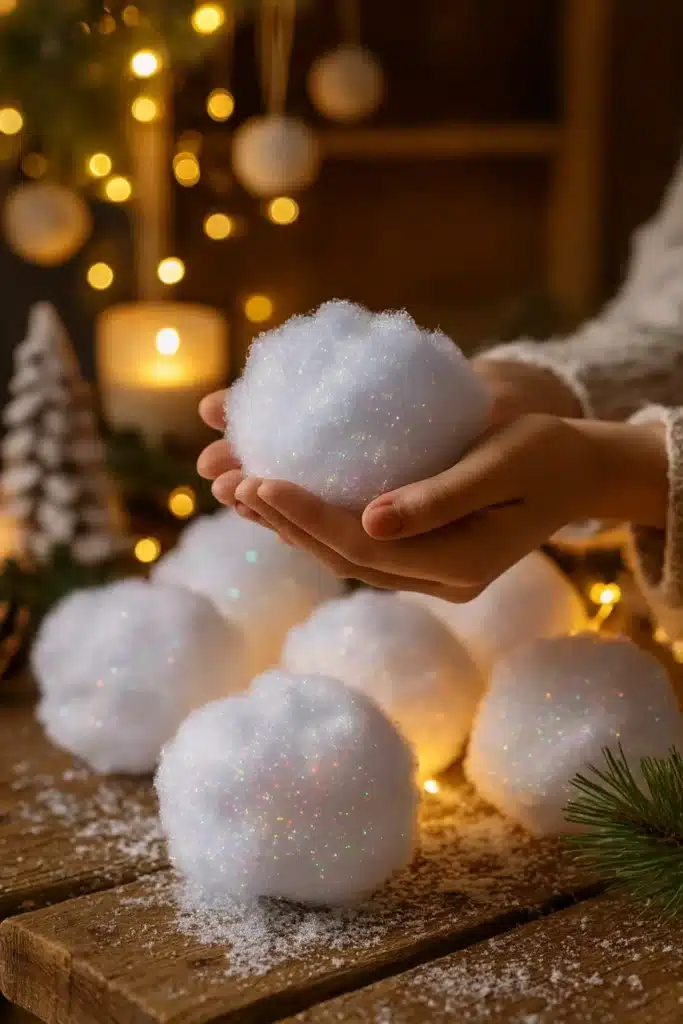
Ingredients You’ll Need for Cotton Slime Snowballs
Alright, let me tell ya — I’ve tried every homemade slime recipe under the sun. Some were so sticky they glued the dog’s fur to the couch (don’t ask), and others turned out like hardened glue pancakes. But after way too many fails, I finally found the perfect mix for soft, fluffy, snow-like slime that kids go bananas over.
So here’s what I swear by — these are the non-toxic slime ingredients you need for those dreamy Cotton Slime Snowballs:
🧴 1. White School Glue (The Stretchy Base)
Start with good ol’ white glue. Nothing fancy — just your standard Elmer’s or whatever’s cheapest in bulk. You want it to be washable and non-toxic, especially if curious little hands end up tasting a sample (because, let’s face it, they will). This is what gives the slime that stretchy, satisfying pull.
Pro tip: I once used glitter glue and it turned the snowballs into sparkly purple blobs. Pretty? Yes. Snowy? Nope.
🪒 2. Shaving Cream (For Fluff You Can’t Resist)
This is the magic ingredient. You add shaving cream and suddenly your slime goes from meh to marshmallow cloud. It fluffs up like whipped cream, and when mixed right, it legit feels like snow. Just don’t go wild with it — too much and your slime will crumble instead of stretch.
One time I used menthol shaving cream and the kids said it smelled like grandpa. 😬 Stick with unscented!
🌽 3. Cornstarch (Secret Cottony Softness)
Cornstarch is like the sneaky ingredient no one talks about. Just a couple spoons in the mix and your slime gets that cotton-soft feel that’s SO satisfying to squish. It also helps hold the snowball shape better — so it’s not just slime that melts into a blob.
Weird tip that works: Sift it in slowly — dump it too fast and it turns into lumpy mess quicker than you can say “oops.”
👁️🗨️ 4. Saline Solution (The Activator You Already Own)
You don’t need any fancy slime activator kits or Borax powders — saline solution (the kind for contact lenses) works like a charm. Look for one with boric acid and sodium borate in the ingredients. Without that, it won’t firm up the slime.
Add it a little at a time while mixing, or you’ll end up with a rubbery disaster. Trust me — overactivated slime is like chewing gum left out in winter.
✨ Optional: Foam Beads, Glitter, or Cotton Fluff
Want the snowball vibes turned to max? Add-ins like foam beads or pulled-apart cotton balls give texture that’s super snowy. A little silver glitter makes it sparkle like frost. Just don’t overload it — otherwise you’ll end up sweeping tiny beads out of your carpet for months.
One mom in my playgroup added peppermint oil too — made her house smell like a candy cane factory. Not a bad vibe for winter crafts!
I always say: slime isn’t just goo — it’s science you can squish. So grab these safe slime ingredients, let the kids help, and enjoy the snowy chaos. And hey, if you’re planning a party or winter playdate, consider pre-packing your own DIY slime kit for each kid. Makes cleanup 100x easier and they love having their own stuff.
Step-by-Step Guide to Making Cotton Slime Snowballs
Okay, here comes the fun (and slightly messy) part — how to make slime at home without turning your dining table into a science experiment gone wrong. I’ve definitely had my fair share of slime disasters — like that one time the saline solution cap fell off mid-pour. Instant rubber bouncy ball. Oops.
But don’t worry — I’ve got your back with a foolproof step-by-step that’s worked for my own kids and even during a preschool craft day (no meltdowns, can you believe it?)
🥣 Step 1: Mix Glue and Shaving Cream
Grab a big mixing bowl — bigger than you think you need. Pour in about ½ cup of white school glue (remember: non-toxic is key). Then add roughly the same amount of shaving cream. Use a spatula or even a spoon and stir like you’re whipping frosting.
The goal? A fluffy, whipped texture that’s soft but not too airy. Think marshmallow fluff, not meringue.
🌨 Step 2: Add Cornstarch for Softness
Here’s where the DIY snow slime magic starts to kick in. Add 2 tablespoons of cornstarch and stir gently. This makes your slime feel like soft snow instead of rubbery goo.
I’ve tried skipping this step before — big mistake. The texture turns sticky and kind of gross. Cornstarch is what gives it that cottony feel and helps it hold shape.
🧪 Step 3: Activate with Saline Solution
Go slow with this one. Add saline solution (just a few drops at a time) and stir well. Once it starts pulling away from the sides of the bowl and forming a blob, you’re on the right track.
The trick with safe slime for toddlers is not over-activating. If it gets too stiff, the fun squish factor disappears. Add more only if it’s still too sticky after kneading.
Tip: If you accidentally go overboard (been that guy), add a tiny splash of warm water and knead it in.
🤲 Step 4: Knead Like Dough
Once the slime’s holding together, ditch the spoon and use your hands. Knead it like dough — stretch, fold, squish. At first, it might be a little sticky, but keep going. After 2–3 minutes, it should become smooth, stretchy, and irresistibly squishable.
One of my kids said it felt like “a snowball from a dream.” Nailed it.
✨ Step 5: Add Extras (Optional but Awesome)
Now’s your chance to customize. Add in foam beads for that snow-crunch texture, or pull apart cotton balls and knead in fluff for cloud-like softness. Want sparkle? Toss in a bit of silver glitter.
Whatever you do, don’t go overboard. I once let my daughter dump in a whole jar of glitter — looked like Elsa exploded in our kitchen. Pretty, but never again.
❄️ Step 6: Shape Into Snowballs
Take your finished slime and roll it into palm-sized balls. You can make mini snowballs or jumbo ones. They’ll hold their shape for a bit and then slowly melt back into slime form — which, honestly, is part of the fun.
Store them in airtight containers so they don’t dry out. I like using small snack tubs and labeling each with names — great for parties or classroom crafts!
And there you have it — a slime recipe for kids that’s as easy as it is magical. You’ll probably get requests to make it again before you’ve even cleaned the bowl. Next time? Let the kids do the mixing. It’s messy, but the giggles are worth it.
Tips for the Best Snowy Slime Experience
Alright, so you’ve got your snowballs — fluffy, squishy, magical. But if you’re like me, you want them to stay perfect for more than ten minutes. Trust me, I’ve had batches go from heavenly to “what is this mess?!” real quick. So let me save you the heartache (and the cleanup).
These are my best no-BS tips for keeping your DIY slime for kids experience fun, stress-free, and as mess-proof as it gets.
✅ Use Fresh Shaving Cream
I learned this the hard way — old shaving cream totally ruins the fluff factor. It comes out watery and thins out the whole slime texture. You want that thick, foamy goodness that puffs up your slime like snow. If you shake the can and it sounds hollow? Toss it.
🧪 Add Saline Slowly… Seriously
When people ask me how to make fluffy slime that’s not stiff or sticky, this is the key. Go slow with the activator. It’s easier to fix under-activated slime than a rock-hard one. Add a few drops at a time and stir between each squirt.
I got overconfident once and dumped in a whole tablespoon. Instant slime fail.
📦 Store It Right — Airtight is Life
You want that soft texture to last more than a day? You gotta store it right. Grab small airtight containers (I use those cheap ones from the dollar store) and make sure the lid is sealed tight. No air = no drying out = happy slime.
Bonus tip: Add a cotton ball inside the container if you’re in a dry area — helps hold moisture longer!
🎨 Customize Without Chaos
Okay, I love glitter and beads as much as the next crafty mom, but too much turns your slime into a crunchy, crumbly mess. A teaspoon of glitter or a handful of foam beads is plenty. And if you’re doing this with toddlers? Maybe skip the small bits altogether. Swallowing a foam bead = not fun.
For younger kids, I like using safe slime for toddlers add-ins — soft cotton fluff or even food-safe sprinkles (yep, they work!).
🧼 Clean Hands = Clean Slime
Here’s a weird tip, but it works. Have the kids wash their hands before playing. Dirty hands introduce crumbs, fuzz, and mystery gunk into the slime. It gets gross real fast. Same goes for surfaces — clean table, clean slime. End of story.
💡 Turn It Into Sensory Play
Don’t stop at squishing! We turn our homemade sensory play ideas into mini games. Snowball stacking contests. Hide a bead and find it blindfolded. Create a “snowball bakery.” The more imaginative you get, the longer the fun lasts.
I promise, with just a little prep and a few of these tricks, your slime will last days — sometimes a whole week — and still feel like a fresh snowball straight from the clouds. And hey, if it starts to dry out? Add a tiny drop of water, knead it in, and boom, back to life.
Educational and Sensory Benefits for Kids
When I first made slime with my kids, I thought it was just for giggles. Honestly, I didn’t expect it to be anything more than a fun (and messy) afternoon. But let me tell you — I was shocked by how much learning snuck in while they squished, stretched, and laughed their way through it.
Turns out, these fluffy cotton slime snowballs aren’t just cool sensory toys — they’re full-on brain builders.
🧠 Teaches Basic Science (Without the Eye Rolls)
Slime-making is like a DIY chemistry lab — just without the lab coats and boring lectures. Mixing glue, cornstarch, and saline? That’s a legit chemical reaction! I explained to my five-year-old how the ingredients bind together, and he looked at me like I was a wizard. Science win.
This kind of STEM sensory play is awesome for sparking curiosity. You can sneak in terms like “polymer” and “activator,” and suddenly they’re learning without even realizing it.
✋ Boosts Fine Motor Skills
Here’s something I didn’t expect: rolling, kneading, and pulling slime is amazing for fine motor skills development, especially for toddlers and preschoolers. It strengthens hand muscles, which helps with writing, buttoning, tying shoes — all that everyday stuff.
My youngest used to get frustrated with buttons. After a few weeks of slime play? Boom. He was snapping his coat shut like a pro.
🧘♀️ Encourages Focus & Calms Chaos
Not gonna lie — I’ve pulled out the slime jar during more than one tantrum. There’s something about the repetitive squish and stretch that chills kids out fast. It’s like toddler therapy without the copay.
Some parents call it a “reset button,” and I totally get it now. Plus, it encourages kids to sit still and focus for longer stretches of time, which is a miracle in itself.
🎨 Sparks Creativity and Role Play
I’ve seen cotton slime snowballs become snowman noses, snow cupcakes, alien brains, and even “slime pets.” Give a kid some soft, stretchable snow-like goop, and their imagination takes off.
Toddler learning through play is no joke — they problem-solve, make decisions, and tell stories, all while elbow-deep in sparkly fluff.
👫 Great for Social and Cooperative Play
You wouldn’t think a bowl of goop would help kids play better together, but it totally does. We’ve done slime playdates and even used it as a group activity in class. They share tools, trade snowball designs, and learn to take turns without someone ending up in tears.
Well… most of the time.
Honestly, I used to feel guilty for not doing more “structured learning” at home. But once I realized how much real development happens during slime play? Total game-changer. It’s fun, functional, and secretly educational — the parenting trifecta.
If you’ve made it this far, you’re officially a slime wizard! From mixing glue and shaving cream to rolling the fluffiest snowballs this side of the freezer aisle, you now know how to create a DIY winter craft that’s fun, educational, and just messy enough to keep it exciting.
These cotton slime snowballs aren’t just an easy slime recipe — they’re a whole vibe. They give your kids something squishy to play with, spark their creativity, and teach them science on the sly. Plus, let’s be honest, it’s kinda satisfying for grown-ups too. I may or may not sneak a squish when the kids aren’t looking.
So the next time it’s too cold to play outside or you’re looking for an indoor winter activity that won’t result in glitter glued to your ceiling, give this sensory snowball project a try.
📌 Pin it for later and share it with your crafty parent friends! It’s one of those activities you’ll come back to again and again.
Want more DIY fun like this? Drop me a comment or tag me in your slime creations — I’d love to see what snowy magic you come up with!