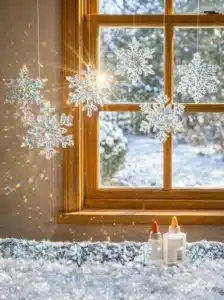
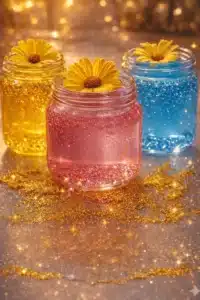
Have you ever seen a flower sparkle like a diamond? That’s exactly what you’ll get when you try making DIY Crystal Flowers at home! This hands-on science activity is more than just fun—it’s a stunning way to explore chemistry with your kids. I still remember my first try; I accidentally dyed my fingertips pink for a week! 😅
Using simple materials like borax and boiling water, you can turn fresh or fake blooms into glittering crystal art. Whether you’re a homeschooler, a crafty parent, or a curious kid, this is one project that mixes learning with a whole lot of “Wow!”
Let’s dive in and grow some science magic! 🌸✨
Materials You’ll Need to Make Crystal Flowers
Let me tell ya—there’s nothing worse than getting halfway through a DIY science project with your kids and realizing you forgot a key piece. Been there. One time I thought baking soda could substitute for borax powder (spoiler: nope, it just made a mushy flower stew 💀). So here’s your go-to list before you even touch the kettle.
✂️ The Must-Have Crystal Craft Supplies
- Borax powder: You’ll find this in the laundry aisle. Don’t substitute it with baking soda—trust me. This is the secret sauce for growing those magical crystals.
- Boiling water: You need it hot, like “just came out of the kettle” hot. This helps dissolve the borax and get your solution saturated enough for those sparkly formations.
- Glass jar or heat-safe cup: Pick one that’s deep enough to fully submerge your flower. I’ve used old pickle jars—works great, smells weird. 😅
- Flowers (fresh or artificial): I personally love using fake flowers because they last forever. But if you’re after that natural look, white carnations or roses take food coloring beautifully.
- Food coloring: Optional, but c’mon—adding colors makes this ten times cooler. Plus, if you’ve got more than one kid involved, they can each pick their own shade.
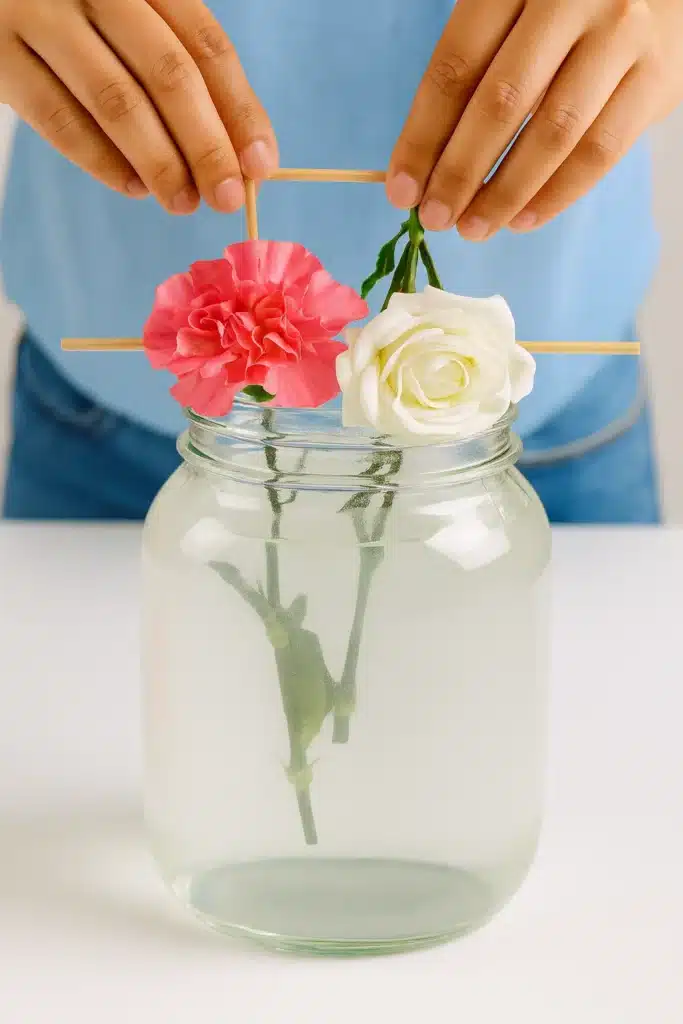
- String + pencil (or chopstick): Use this setup to suspend the flower in the jar if it’s too tall or if you want crystals to form evenly around the petals.
🤯 Stuff I Wish I Knew First Time Around
Alright, here’s some real talk. Don’t use plastic cups. I learned the hard way—they warp. Go glass, always. And if you’re using real flowers, prep them right away. I once left them out too long, and they wilted before hitting the borax bath. Dead flower = crusty disaster.
Also, measure the borax loosely—not all brands dissolve the same. Start with about 3 tablespoons per cup of boiling water and keep stirring until it stops dissolving. That’s your sweet spot.
🧰 Pro Tip for Bulk Crafters
If you’re planning a party, homeschool group, or scout meeting—buy a big box of craft supplies for kids online. You’ll save a ton, and you can make this homemade crystal flowers activity into a group project that’s both fun and educational. Who says science can’t sparkle?
Ready to mix up your borax brew? Next up, I’ll walk you through every step of the crystal-growing magic. Let’s do this! 💥🌸
Step-by-Step Instructions to Grow Borax Crystals
I remember the first time I tried to grow borax crystals—I was overly confident, didn’t measure a thing, and ended up with a jar of floating flower mush. 😂 But hey, that’s how you learn! Since then, I’ve dialed in the process, and now it’s my go-to easy science experiment when I need to keep the kids busy and teach them something cool.
Here’s the foolproof way to grow those shimmering beauties:
🔥 Step 1: Boil the Water
Start by boiling enough water to fill your jar. I usually use about 2 cups per flower. The hotter the better, because hot water holds more borax. Skip the microwave—it doesn’t get the water hot enough for what we need.
🧂 Step 2: Mix in the Borax Powder
This is where the magic begins. Add borax powder one tablespoon at a time, stirring constantly. I use 3–4 tablespoons per cup of water. When it stops dissolving and starts to settle at the bottom, you’ve hit a saturated solution—that’s crystal gold right there.
🌈 Step 3: Add Color (Optional but Fun)
This is totally optional, but I highly recommend adding food coloring. It transforms your DIY crystal flowers into works of rainbow art. Just a few drops will do. I once tried mixing blue and red for a “galaxy” vibe… ended up with muddy purple, but still looked awesome.
🌸 Step 4: Submerge the Flower
Drop your flower into the jar. If it floats, tie a string around the stem and hang it from a pencil laid across the jar top. This helps it stay centered and keeps the petals from touching the sides—better crystal coverage, baby!
⏱️ Step 5: Let It Sit Overnight
Set your jar somewhere safe and let the solution do its thing. Overnight is perfect. I usually leave it for about 12 hours. Waking up to a fully crystal-covered flower is like unwrapping a gift—seriously, it never gets old.
🧻 Step 6: Dry and Display
Carefully pull out your flower and place it on a paper towel. Let it dry for a few hours. Boom. You’ve got a sparkly, shimmering piece of crystal science project art ready to show off.
I’ve botched this before—like that one time I moved the jar halfway through and ruined the whole crystal growth. 😩 Lesson? Leave it alone. The less you disturb it, the better the crystals form.
Whether you’re making one flower or a whole DIY crystal bouquet, following these steps will give you solid, glittery results. No science degree required!
Tips for Customizing Your Crystal Flowers
Let me tell ya, once you’ve nailed the basics of making DIY crystal flowers, it’s impossible not to get a little… extra. 😂 I’ve gone from basic white blooms to full-on rainbow glitter experiments that look like something out of a fantasy movie. And the best part? Kids love having a say in how their custom science crafts turn out.
🌈 Play With Color
Here’s a game-changer: white flowers + food coloring = colored borax crystals that POP. I’ve done red roses with green crystals for Christmas, pastels for spring, and one time we tried making a black flower with blue crystals for Halloween. Spooky and stunning. 💀✨
Pro Tip: Gel food coloring works better than liquid—it’s more vibrant and you need less of it. But either will do the job.
💐 Real vs. Fake Flowers
Both work, but they serve different vibes.
- Real flowers give you natural shapes and soak up the dye beautifully.
- Artificial flowers are sturdier, last forever, and you can make full DIY crystal bouquets without worrying about wilting.
One time, I let my 7-year-old pick out a bunch of dollar-store silk flowers. We ended up with a blingy hot-pink bouquet that’s STILL in her room a year later.
🔥 Try Unique Crystal Patterns
Here’s where things get nerdy in the best way. Try using:
- Flowers with tight petals (like roses) for dense crystal coverage
- Loosely petaled blooms (like daisies) for dramatic sparkle outlines
- Food coloring gradients for ombré-style crystals
And if you’re a little extra (like me), dip only half the flower in the solution. You’ll get a cool half-frosted look like it’s been kissed by winter.
🎯 Pick a Theme
Turn your art projects for kids into something more memorable by tying them to holidays or events:
- Valentine’s Day = red & pink crystal roses
- Birthday parties = rainbow flowers
- Science fair = showcase the crystal process with labeled jars
- Teacher gifts = add a tag that says “Thanks for helping me grow!”
We once made personalized flowers for Mother’s Day with names written in glitter glue on the stems—big hit, zero stress.
Honestly, this is where the creativity takes over. The science is cool, but seeing your kid’s eyes light up because they chose the colors or made a flower “just like Elsa’s”… that’s the real win.
Science Behind the Sparkle – How Crystals Form
Okay, real talk—when my daughter asked, “Mom, is this magic or science?” I almost said magic. 😅 But no, it’s 100% good old-fashioned chemistry. And it’s actually kinda mind-blowing how simple this crystal growth experiment is once you understand what’s happening.
🔬 Supersaturation: The Secret Sauce
When you stir borax powder into boiling water, it dissolves. But only up to a point. Once the water can’t dissolve any more borax, it becomes what science folks call a supersaturated solution. That’s just fancy talk for “there’s too much stuff dissolved in this hot water.”
As the water cools, it can’t hold onto all that borax—so the extra starts to separate out as solids again. And guess where those solids land? Yep—your flower.
🧲 Your Flower Is the Crystal Magnet
This is my favorite part: the chemical reaction for kids to understand is that the flower petals give the borax crystals something to cling to. It’s like giving crystals a comfy couch to grow on. The more texture the flower has (like grooves in petals), the better the crystals grab on.
So every flower ends up looking totally different. That’s why I call them “science snowflakes.” No two crystal flowers are ever the same.
🌡️ What Affects Crystal Growth?
Through trial (and more than a few errors), I’ve learned a few things that can make or break your science project ideas:
- Temperature matters: Hotter water = more borax can dissolve
- Stillness counts: Don’t move the jar! Bumps mess up the crystal formation
- Time is everything: Leave it longer, get thicker crystals
I once tried rushing it and pulled out the flower after 3 hours. It had barely anything on it. Left one overnight? It was so crusted in crystals you could barely see the petals. Gorgeous.
🧪 Teaching Moment Opportunity
If you’re a homeschooler or just into teachable moments, this project is gold. It covers:
- Solubility and saturation
- Cooling rates
- Precipitation (yep, just like weather!)
- Crystal structures
One time we even made a poster showing “before,” “during,” and “after” shots for a school project. Won a ribbon, too. 🏅
So next time your kiddo asks “how does this work?”, you can totally drop some knowledge and feel like a genius. Or just nod and say, “SCIENCE!” either works. 😂
Fun Ways to Use Your Crystal Flowers
So, you’ve made your DIY crystal flowers—they’re gorgeous, sparkly, and honestly kinda magical. But now what? Just let ‘em sit on the kitchen counter? Heck no. There are tons of cool and meaningful ways to show off your handiwork.
🎁 Make Homemade Gifts for Teachers or Family
One of my go-tos around the holidays is using these as homemade gifts for teachers. Just wrap the stem in twine, pop it into a small gift bag, and boom—you’ve got a meaningful, handmade gift that screams “We tried, but in a good way.” 😂
My daughter made one for her science teacher with a little tag that said, “Thanks for helping me grow!” Melted hearts everywhere.
🏠 DIY Flower Decorations for Home
These make DIY flower decorations that are way prettier than most store-bought stuff. I have a few sitting in a glass vase on our windowsill, and when the sun hits them just right? Instant mood lift. 🌞
You can also hot glue them onto wreaths, shadow boxes, or even picture frames. One year we added them to our Christmas tree and they looked like snowy blossoms.
🎨 Turn It Into an Art or Science Display
I’ve helped my niece do a science crafts for kids presentation where she made three flowers with different colors and crystal times. She labeled each one, explained the process, and even included a little poster with the chemistry behind it. Nailed it.
You could also build a whole classroom display or birthday party table centerpiece with them. Bonus? They’re cheap to make, so you can go big without breaking the bank.
💐 Create a Crystal Bouquet for Events
Wanna go full Pinterest-mode? Bundle a few together and make a crystal bouquet. I did this for a baby shower once—everyone thought they were edible at first (they’re not—don’t eat them!). 😅
Whether you mix colors or go for a frosted-white fairy tale vibe, the effect is straight-up stunning. Tie them with satin ribbon and you’re in business.
So don’t let those beauties gather dust! These sparkly little masterpieces deserve a place to shine—whether in a vase, a gift bag, or your next creative project.
There you have it—your complete guide to creating stunning DIY crystal flowers right at home! From gathering the right materials to watching those dazzling crystals grow overnight, this sparkly science activity is one part chemistry lesson, one part arts-and-crafts magic.
Whether you’re a parent trying to keep curious minds busy, a teacher looking for hands-on science fun, or just a craft-lover who appreciates glittery things (🙋♀️ guilty!), these crystal flowers are the perfect mix of beauty and brains.
And hey—don’t keep your creations a secret! 📸 Snap a pic, post it, and share your craft on Pinterest. Inspire other makers to jump in and grow their own crystal garden.
Until then… keep crafting, keep experimenting, and keep making science sparkle. 🌸✨